Зображення з Реєстру
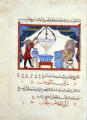
Зображення з КАМІСу

Ідентифікатори
452-ГРВ МХ
· тип: Інвентарний облік (#2) · статус: Актуально (#1) · від: 2025-01-21
2148; 723 БВ
· тип: Інвентарний облік (#2) · статус: Неактуально (#2) · від: 2025-01-21
1153-ПН
· тип: Первинна реєстрація ОФ (#1) · статус: Актуально (#1) · від: 2025-01-21
Унікальний ідентифікатор: 290202408296935
Зовнішнє ID: KM-19535
Назви
- Аркуш з арабського манускрипту. Фармакологія Діоскорида [uk] · тип: Інвентарна (#5)
- мініатюра [uk] · тип: Описова (#3)
Класифікація
мініатюра #161
Матеріал і техніка
| Матеріал | Техніка |
|---|---|
| Папір #329 | Гуаш #199 |
Групи зберігання
Східна гравюраОписи
uk
Комм.: Серед розмаїття рукописних книг, що створювалися, починаючи з 12 століття на арабському Сході, особливу групу становлять ілюстровані наукові трактати, які часто є видатними художніми творами. Широко відомі з цього погляду ілюстрації до арабського перекладу рукопису «Фармакології» грецького лікаря Діоскорида. Ця дуже популярна в середні віки природничо-наукова праця була переписана 1224 року в Багдаді видатним каліграфом Абдаллахом ібн аль-Фадлом. Музей зберігає аркуш із цього рукопису з ілюстрацією процесу приготування ліків, автор якої невідомий. Надзвичайно спостережливо й художньо переконливо середньовічний художник передає етнічні риси персонажів, їхні жести, вбрання, різноманітні побутові деталі./Аналогіi: 1. "Preparing Medicine from Honey" Leaf from Arabic manuscript of Materia Medica by Diascorides, Iraqi, 13th century. colors and gilt on paper. 12 3/8[9 in. The Met.Mus.of Art. http://www.metmuseum.org/toah/works-of-art/13.152.6
2. Miniature from a copy of Kitab al-hashaish, a translation of Dioscorides’s De Materia Medica. “The Doctor’s Office”
Iraq, Baghdad?; 1224. Leaf: 32.2 × 24 cm // David Collection (Kopenhagen) //
http://www.davidmus.dk/en/collections/islamic/dynasties/late-abbasids
3.The Pharmacy - from De Materia Medica of Dioscorides. Arabic translation, Baghdad, Iraq, 1224 (621 A.H.}. Metropolitan Museum of Art, new York: Cora Timken Burnett Bequst, No. 57.51.21
http://www.h-net.org/~fisher/hst372/weekeight.html
4. Islamic Anonymous. De Materia Medica of Dioscorides. Preparation of medicines from flowers & consu
1224 Islamic. Baghdad. Iraq. Washinton D.C. Freer Gallery of Art. http://gallery.sjsu.edu/encounters/mideas/index.html
5. Islamic Anonymous. De Materia Medica of Dioscorides. Gathering clay on Lemnos.
1224 Islamic. Baghdad. Iraq. Washinton D.C. Freer Gallery of Art.
http://gallery.sjsu.edu/encounters/mideas/index.html
6.
Man Bitten by Mad Dog". llustration from an Arabic translation of the Materia Medica by Dioscorides. Iraq, Baghdad, dated 1224. Opaque watercolor, ink, and gold on paper. 33.2 cm x 25.0 cm.
http://www.asia.si.edu/exhibitions/online/islamic/artsofbook2a.htm
7.
Page from a manuscript of Dioscorides' De Materia Medica
Possibly from Baghdad, Iraq
AD 1224
'A discussion between two doctors and a student' in a treatise on herbal medicine'
http://www.britishmuseum.org/explore/highlights/highlight_objects/me/p/dioscorides,_manuscript_page.aspx
/Історія Атрибуціi: Крачковська В. "Мус. искусство..." Абдаллах ібн аль Фадль, 13 ст.
Вязьмітіна М.В. "Мистецтво країн ісламу". 1930 р.Арабо-Месопотамська школа, поч. 13 ст.
Гюзальян Л.Т. (Ерм. 1953) Абдаллах ібн аль Фадль, поч. 13 ст. Месопотамська школа
/Кількість: 1/Старі документи прийому: Акт повернення № 3 від 15.06.1951/Історія предмета, легенда: "De materia medica" - "Фармакологія" грецького лікаря Педанія Діоскорида - науковий трактат, що мав особливу популярність на середньовічному Близькому Сході. Сторінка належить до арабського перекладу, переписаного у 1224 р. калліграфом Абдаллахом ібн аль-Фадлем. "Фармакологію" було перекладено арабською у середині 9 ст. у відомому центрі перекладів в Багдаді, знаному як Дім Мудрості
This miniature is a lovely example of the oldest preserved book painting from the Islamic world. It was made in Iraq by Abdallah ibn al-Fadl, who presumably was responsible for both copying and illustrating it. The style is an example of “Arab painting,” in which Byzantine and local Christian pictorial conventions were still found, for example in the use of haloes and the folds of garments.
The manuscript contains a number of depictions of medicinal plants. The fact that there are also figurative depictions of more “unnecessary” scenes, such as this doctor’s office, has been considered by many to signify the birth of Islamic book painting.
Among the Greek scientific texts that appealed to the Arab translators and artists of Baghdad, a center for manuscript production in the thirteenth century, were herbals and bestiaries. They described the appearance, habitat, salient characteristics, and uses of various plants and animals, a tradition going back to late antiquity, but pictorially were more often influenced by the art of Byzantium. Particularly popular was the treatise of Dioscorides, a Greek physician working in the Roman army in Asia Minor during the first century A.D.
While some miniatures illustrating this scientific text on medicinal uses, principally of plants, rather closely follow their Byzantine prototypes, others such as this example reveal more of a human than scientific approach, as the doctor seems to ponder the formula he is mixing. The decorative trees help to contain as well as balance the composition. The lack of spatial depth combined with clarity of design, lively forms, and bold coloring are characteristic of this school of painting.
uk
Розміри листа: 30 х 19
uk
Документи переміщення - Дата документа: 2011-05-20 00:00:00/NAMEDOC: Акт про ВМП (повернення)/Дополнение: після експонування в постійній експозиції музею/Дополнение: Біленко Г.І./Дополнение: Корпачова Л.Т.
uk
Документи переміщення - Дата документа: 2016-11-17 00:00:00/NAMEDOC: Акт про ВМП (видача)/Дополнение: експонування на виставцi/Выставка: “Істини вина у творах світового мистецтва з колекції Музею Ханенків”/Дополнение: Біленко Г.І./Дополнение: Корпачова Л.Т.
uk
Документи переміщення - Дата документа: 2017-02-08 00:00:00/NAMEDOC: Акт про ВМП (повернення)/Дополнение: повернення до фондів музею з експонування на виставці/Выставка: “Істини вина у творах світового мистецтва з колекції Музею Ханенків”/Дополнение: Біленко Г.І./Дополнение: Корпачова Л.Т.
uk
Документи переміщення - Дата документа: 2022-02-22 00:00:00/NAMEDOC: Акт про приймання предметів на МВЗ/Дополнение: Логвин М.Ю.
uk
Виставки: повернена по акту № 3 від 15.06.1951
uk
Виставки: “Істини вина у творах світового мистецтва з колекції Музею Ханенків” з 18 листопада 2016 р. по 5 лютого 2017 р.
uk
Сдатчик-частное лицо: колекція Б.І. та В.Н. Ханенків.
uk
Закладка “Атрибуція” - Змiн. назва: Приготування ліків/Наим. предмета, издания: мініатюра/Змiн.розміри зображення: 168х 121/Змiн.розміри листа: 330 х 239/Змiн.додаток до назва (лист, ...): Аркуш з арабського рукопису трактату "Про ліки" («Фармакологія») Педанія Діоскорида/Змiн. час створення: 1224 рікАвтор, автор съемки: Іракський художник 13 ст.Новый материал: папірИзм. предметный классификатор: мініатюрамісце створення, школа: БагдадНовый материал: чорнилоНовый материал: фарбиНовый материал: золото
uk
На папері - вертикальна складка від верхнього краю до мініатюри. Через всю мініатюру - горизонтальний прорив, у верхній частині заклеєно цигарковим папером .,
Персоналії
Колекції
Характеристики
Походження (#46)
- З колекції Б.І. та В.Н. Ханенків (#59)
Тематичні рубрики (#42)
- мусульманська мініатюра (#393)
Стан
Розміри
Ціни
Події
| Тип | Місце (uk) | Місце (lat.) | Місце (other) | Дата (text) | Роки | Джерело | Коментар |
|---|---|---|---|---|---|---|---|
| Створення (#1) | Арабо-месопотамська школа | XIV ст. | — | — | — |
Gemstones
Дорогоцінні метали
Базові значення
- state: 1 (?? Статус предмета = На постійному зберіганні (#1) ??)
- Службова інформація - підпис (status): Чернетка (#1)
- Класифікація (classification_id): мініатюра #161
- Можливість транспортування (is_transportable): 0
- Держреєстр національного культурного надбання (is_registered): 0
- Топографічний шифр (topography_code): фонд
- Спосіб надходження (acquisition_method): (#)
- Джерело надходження (acquisition_source): з колекції Б.І. та В.Н. Ханенків./от колекції Б.І. та В.Н. Ханенків.
- external_id: KM-19535
- creator_id: 165
- updater_id: 165
- owner_id: 90
- keeper_id: 90
- is_fragment: 0 (?? Фрагмент = 0 ??)
- is_private_images: 0
- storage_location_id: —
- introduction_reason: —
- delete_reason: —