Зображення з Реєстру
Зображення з КАМІСу
Ідентифікатори
78-БВ МХ
· тип: Інвентарний облік (#2) · статус: Актуально (#1) · від: 2025-01-21
Унікальний ідентифікатор: 45120240828946
Зовнішнє ID: KM-4160
Назви
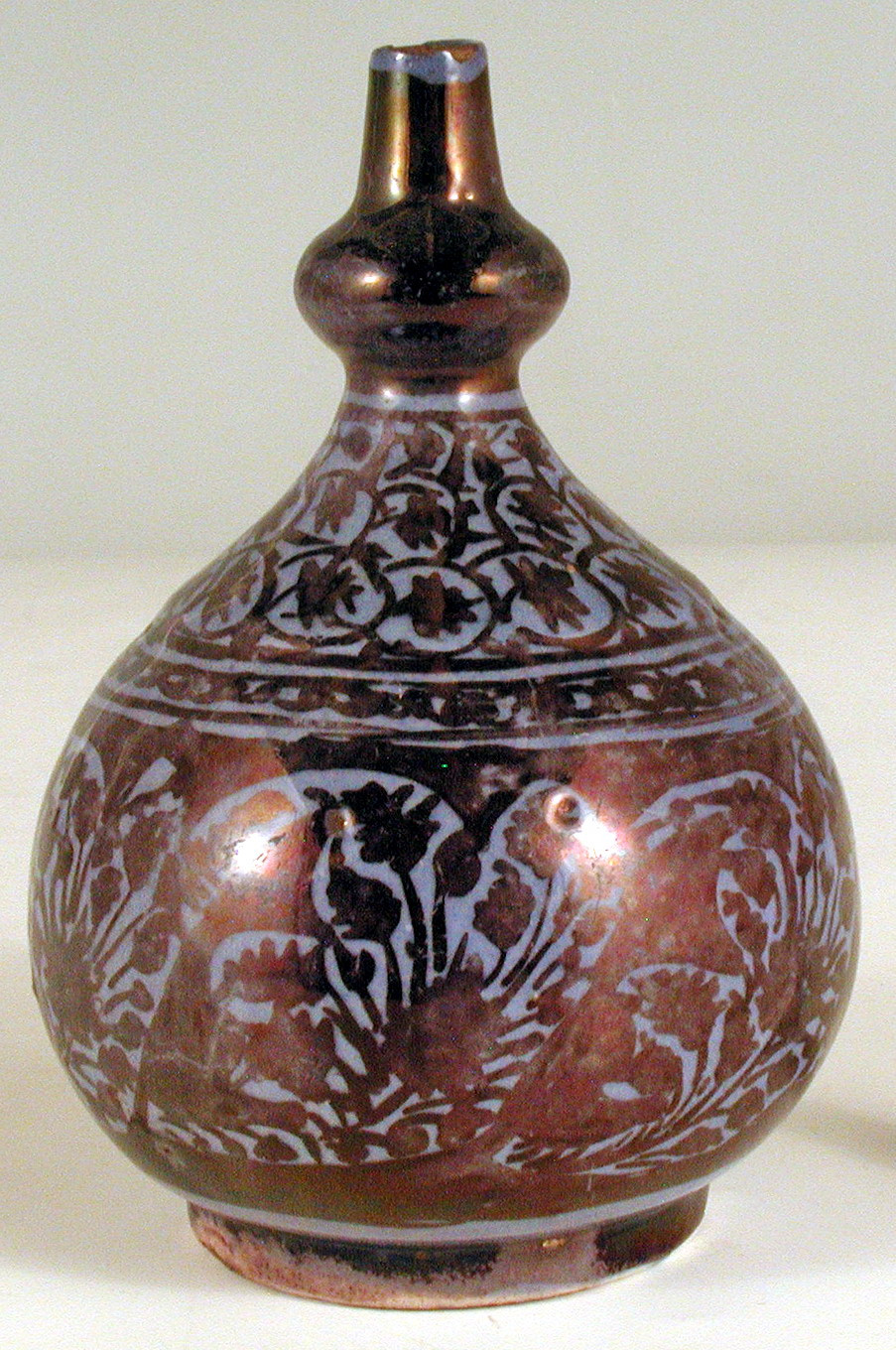
- Пляшка для кальяну з грушоподібним корпусом. [uk] · тип: Інвентарна (#5)
Класифікація
Матеріал і техніка
| Матеріал | Техніка |
|---|---|
| кашин (фаянс) #560 | синя полива #411 |
| Фаянс #56 | розпис люстром #404 |
Групи зберігання
Мистецтво Близ. СходуОписи
uk
Історія Атрибуціi: 1.Вязьмітіна М. МКІ. 1930. Персія, 16-17 ст.
2. Рапопорт І.В. (Ермітаж), 1963. Іран, Ісфахан, 16-17 ст.
3. Міллер Ю.А. (Ермітаж), 1961. Іран, Ісфахан, 16-17 ст.
/Кількість: 1/Побутування/творiв такого типу: This flask belongs to a type that was common in Iranian productions of the period. The metallic luster technique first appeared in Iraq during the 9th century and was particularly in fashion in Seljuk Iran. But, as the production process was complex, it was abandoned toward the middle of the 14th century. After an initial firing at a high temperature, a metal oxide decoration was painted on the piece. It was then re-fired at a lower temperature in a reducing atmosphere. Around 1650, however, lusterware had a revival and objects decorated by this technique were once again frequent. They lasted up until the 18th century. There were, nevertheless, certain technical modifications such as the change of the tonality of the luster from gold to brown. Moreover, the color of the luster often has a bluer or more violet reflection, a change that appears to be due to temperature variations during firing rather than to any modification in the composition of the glaze.
The type of decoration is also different. The Safavids favored faunal and floral motifs, arabesques and cartouches. Birds, flowers, leaves and trees - notably cypresses which were the symbol of beauty - are depicted on these wares.
It appears, however, that Safavid ceramic decoration was not systematically inspired by far-eastern motifs, but rather by the miniatures produced by the Iranian royal workshops (ketabkhaneh).
uk
Розміри: В – 14,5; Низ – 4,5; Верх – 2; Об’єм – 30,5
uk
Документи переміщення - Дата документа: 2021-12-25 00:00:00/NAMEDOC: Акт про приймання предметів на МВЗ/Дополнение: експонування в постійній експозиції музею/Дополнение: Корпачова Л.Т./Дополнение: Крамарева О.А.
uk
Сдатчик-частное лицо: колекція Б.І. та В.Н. Ханенків.
uk
Закладка “Атрибуція” - Наим. предмета, издания: Сулійка/Змiн. час створення: 17 ст.місце створення, школа: КерманНовый материал: фаянсПериод: доба СефевідівИзм. техника: синя поливаИзм. техника: розпис люстром
uk
Край шийки відбитий.,
Персоналії
Колекції
Характеристики
Стан
Розміри
Ціни
Події
| Тип | Місце (uk) | Місце (lat.) | Місце (other) | Дата (text) | Роки | Джерело | Коментар |
|---|---|---|---|---|---|---|---|
| Створення (#1) | Іран | XVI-XVII ст. | — | — | — |
Gemstones
Дорогоцінні метали
Базові значення
- state: 1 (?? Статус предмета = На постійному зберіганні (#1) ??)
- Службова інформація - підпис (status): Чернетка (#1)
- Класифікація (classification_id): — #—
- Можливість транспортування (is_transportable): 0
- Держреєстр національного культурного надбання (is_registered): 0
- Топографічний шифр (topography_code): вітрина
- Спосіб надходження (acquisition_method): (#)
- Джерело надходження (acquisition_source): з зібрання Б. І. та В. Н. Ханенків
- external_id: KM-4160
- creator_id: 165
- updater_id: 165
- owner_id: 90
- keeper_id: 90
- is_fragment: 0 (?? Фрагмент = 0 ??)
- is_private_images: 0
- storage_location_id: —
- introduction_reason: —
- delete_reason: —