Зображення з Реєстру
Зображення з КАМІСу
Ідентифікатори
714-БВ МХ
· тип: Інвентарний облік (#2) · статус: Актуально (#1) · від: 2025-01-21
1152-ПН
· тип: Первинна реєстрація ОФ (#1) · статус: Актуально (#1) · від: 2025-01-21
Унікальний ідентифікатор: 84220240828987
Зовнішнє ID: KM-4203
Назви
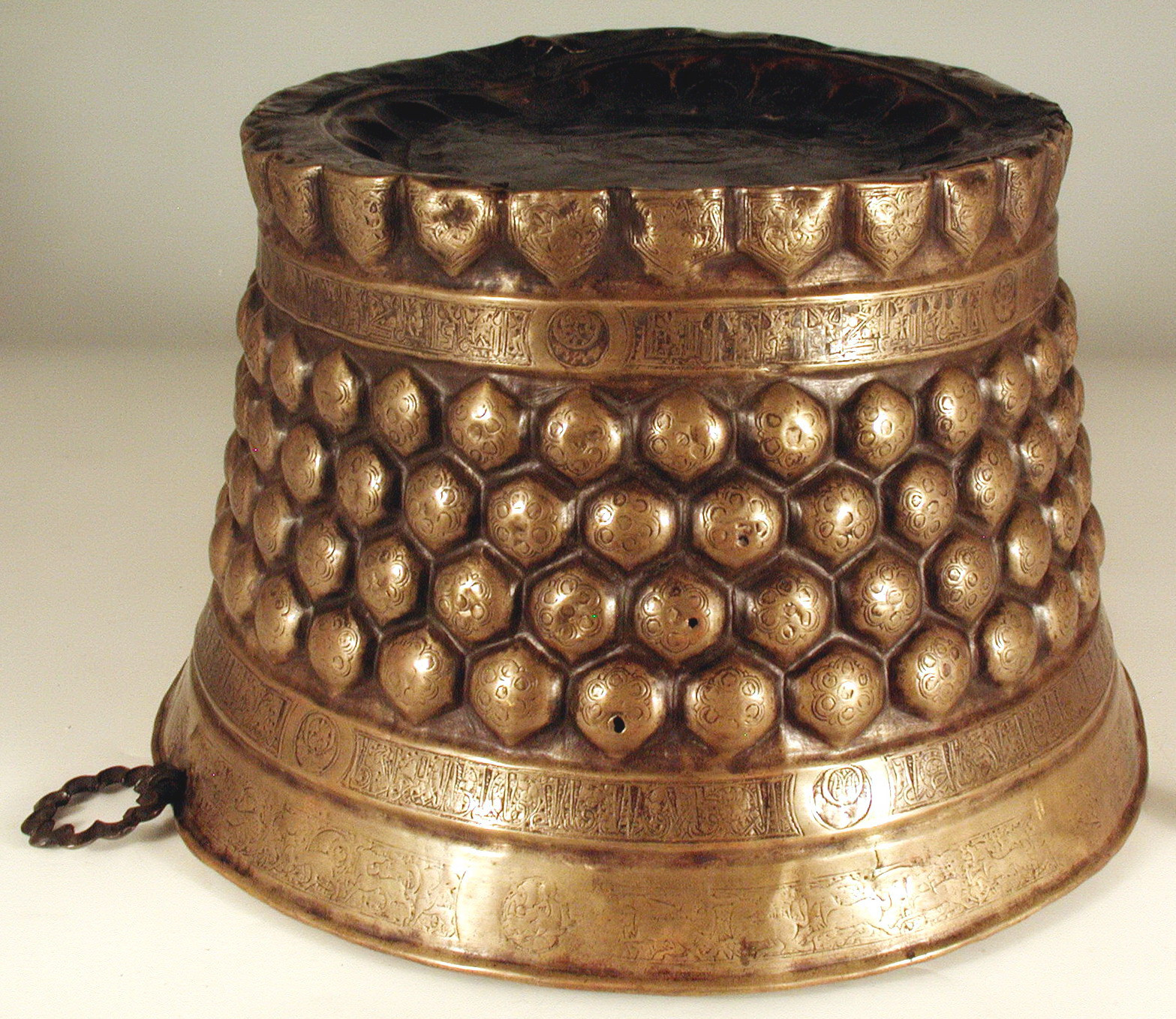
- Свічник у формі усіченого конусу. [uk] · тип: Інвентарна (#5)
Класифікація
Матеріал і техніка
| Матеріал | Техніка |
|---|---|
| Мідь #292 | Кування #73 |
| Мідний сплав #283 | Карбування #71 |
Групи зберігання
Мистецтво Близ. СходуОписи
uk
Аналогіi: 1. Chandelier Perse, fin du XII siecle (Musee du Louvre) // Gaston Migeon, Vol 2, Manuel d'Art Musulman. Paris, 1927, Fig. 233.
2.(Plate XCVIII)
http://www.iranica.com/articles/candlesticks
4. Louvre museum
http://www.louvre.fr/llv/oeuvres/detail_notice_popup.jsp?CONTENT%3C%3Ecnt_id=10134198673226501&CURRENT_LLV_NOTICE%3C%3Ecnt_id=10134198673226501&FOLDER%3C%3Efolder_id=9852723696500830&bmLocale=en
5. Эрмитаж № ИР-1458 // Иванов А.А. Бронзовый подсвечник...
http://www.hermitagemuseum.org/fcgi-bin/db2www/descrPage.mac/descrPage?selLang=Russian&indexClass=GLASSWARE_RU&Query_Exp=%28WOA_TYPE+%3D%3D+%22%BC%D5%E2%D0%DB%DB%22%29+AND+%28WOA_CNTR_ORG+%3D%3D+%22%B8%E0%D0%DD%22%29&PID=IR-1458&numView=1&ID_NUM=41&thumbFile=%2Ftmplobs%2FLSXKUS49ZLR2U4616.jpg&embViewVer=last&comeFrom=browse&check=false&sorting=WOA_NAME%5EWOA_CNTR_ORG&thumbId=6&numResults=78&author=
6. Подсвечник из Туркмении , из музея в Кувейте // Иванов....стор. 474
7. The David Collection (Kopenhagen): Candlestick, embossed and engraved brass
Eastern Iran or Afghanistan; 2nd half of 12th century, H: 33; Diam: 40 cm
http://www.davidmus.dk/en/collections/islamic/materials/metal
8. Freer and Sackler Gallery Collection:
http://www.asia.si.edu/collections/singleObject.cfm?ObjectNumber=F1951.17
Candlestick. ca. 1150-1200. Brass, hammered and chased, inlaid with copper, silver, and black organic material
H: 40.3 W: 47.7 D: 47.7 cm . Afghanistan. Purchase F1951.17
/Історія Атрибуціi: 1. Крачковська В. «Мус.искусств…»,1926. опис без атрибуції
2. Вязьмітіна М. «МКІ», 1930. Північна Персія-Месопотамія, к. 12 - поч. 13 ст.
3. Гюзальян Л.Т. (Ерм., 1953). Північний Іран, 13 ст.
4. Іванов А.А. (Ерм., 1960). Іран, Хорасан, 2 пол.12 - поч. 13 ст.
/Кількість: 1/Історія предмета, легенда: The workshops of eleventh-century Khorasan continued to rely on tried and tested techniques from earlier periods. Copper and white bronze remained the materials of choice, but small incrustations of precious metals also began to be used, sparingly at first, but with increasing frequency as the technique was perfected. Metal inlays using wires or threads and, later, plaques, supplemented the engraved, repoussé and champlevé decorations. Motifs exploited the color contrasts of copper, gold and silver. Contours were emphasized with black paste. In the twelfth century, motifs became more elaborate; geometrical forms and floral, animal or even figural decorations were increasingly widespread, most often accompanied by a Kufic inscription.
Objects were generally shaped by hammering separate sheets which were then fitted together. This candlestick is an exception, however, being one of very few such pieces shaped from a single sheet of metal: an indication of quite exceptional technical skil (?)l. High reliefs of the kind seen here are obtainable only by pushing the material to the limits of its resistance, a fact which suggests the very high quality of the alloy.
/Побутування/творiв такого типу: The production of a piece such as this, hammered from a single sheet of metal (?), is a feat of technical prowess almost without equal. The various decorative elements acknowledge the piece's primary function by developing the theme of light. The main decorative theme is that of light: in Islamic astrology, the lion is associated with the sun, which is also recalled in the form of the roundels.
The candlestick is a very common object in Islamic art. The subjects evoked are familiar elements of the traditional decorative repertory, often seen on items produced in the workshops of eleventh and twelfth-century Khorasan, under the Seljuk dynasty. Here, however, their deployment, modeling and drawing, and their extraordinarily skilled execution are truly exceptional.
A very small number of closely similar objects are known. These pieces vary in their degrees of finish, but the similarities between them are strong enough to suggest that they may have been produced in a single workshop.
Encyclopedia Iranica:
CANDLESTICKS. From the late 6th/12th through the early 10th/16th century the candlestick was one of the most common types of implement produced as a luxury metalware in Iran. Fabricated of bronze or brass, cast or raised from sheet, and inlaid with precious metal or tinned over to produce a silvery surface, the form, decoration, and epigraphic program of these illuminating devices reflect contemporary trends in Iranian metalwork. Despite variations in size, technique, form, and decoration, the candlestick is generally composed of a hollow, upward-tapering base, with a clearly articulated shoulder, from the top of which rises the socket and cylindrical candle-holder. Such candlesticks, regardless of their size or weight, were evidently quite portable, as is indicated by contemporary Persian miniature painting, in which they are depicted in tents or in outdoor settings, as well as by the fact that the actual lighting fixtures are often dedicated to religious shrines located at a great dis
uk
Розміри: 21х36х22,5
uk
Документи переміщення - Дата документа: 2021-12-25 00:00:00/NAMEDOC: Акт про приймання предметів на МВЗ/Дополнение: експонування в постійній експозиції музею/Дополнение: Корпачова Л.Т./Дополнение: Крамарева О.А.
uk
Сдатчик-частное лицо: колекція Б.І. та В.Н. Ханенків.
uk
Закладка “Атрибуція” - Наим. предмета, издания: Основа свічника/Змiн. Написи, клейма, марки: А.А. Іванов (Ермітаж), 1960:
На плечиках арабський напис насхом "...Панування, щастя, благополуччя, благоденство, здоров"я, щастя, заступництво..."
У верхній частині куфічний напис.
В нижній частині пояс насхом:
" Слава, успіх, панування, щастя, благополуччя, благоденство... постійність,... заступництво, благоденство, спокій, милосердя, ... піднесення, ... панування... щастя... благополуччя, благоденство, постійність, заступництво...благоденство".
В нижній часті пояс написано насхом:/Змiн. час створення: друга половина 12 – початок 13 століттямісце створення, школа: Іранмісце створення, школа: ХорасанНовый материал: мідний сплавИзм. техника: куванняИзм. техника: карбуванняИзм. техника: гравіруванняИзм. техника: інкрустація срібломИзм. техника: інкрустація червоною міддюПериод: доба Хорезмшахів
uk
Зверху приклепана кругла пластина. У верхній частині для реставрації п’ятикутників накладена смуга міді.,
Персоналії
Колекції
Характеристики
Стан
Розміри
Ціни
Події
| Тип | Місце (uk) | Місце (lat.) | Місце (other) | Дата (text) | Роки | Джерело | Коментар |
|---|---|---|---|---|---|---|---|
| Створення (#1) | Північна Персія, Месопотамія | XII-XIII ст. | — | — | — |
Gemstones
Дорогоцінні метали
Базові значення
- state: 1 (?? Статус предмета = На постійному зберіганні (#1) ??)
- Службова інформація - підпис (status): Чернетка (#1)
- Класифікація (classification_id): — #—
- Можливість транспортування (is_transportable): 0
- Держреєстр національного культурного надбання (is_registered): 0
- Топографічний шифр (topography_code): над вітриною
- Спосіб надходження (acquisition_method): (#)
- Джерело надходження (acquisition_source): з зібрання Б. І. та В. Н. Ханенків
- external_id: KM-4203
- creator_id: 165
- updater_id: 165
- owner_id: 90
- keeper_id: 90
- is_fragment: 0 (?? Фрагмент = 0 ??)
- is_private_images: 0
- storage_location_id: —
- introduction_reason: —
- delete_reason: —