Зображення з Реєстру
Галерея
Зображення з КАМІСу
Галерея
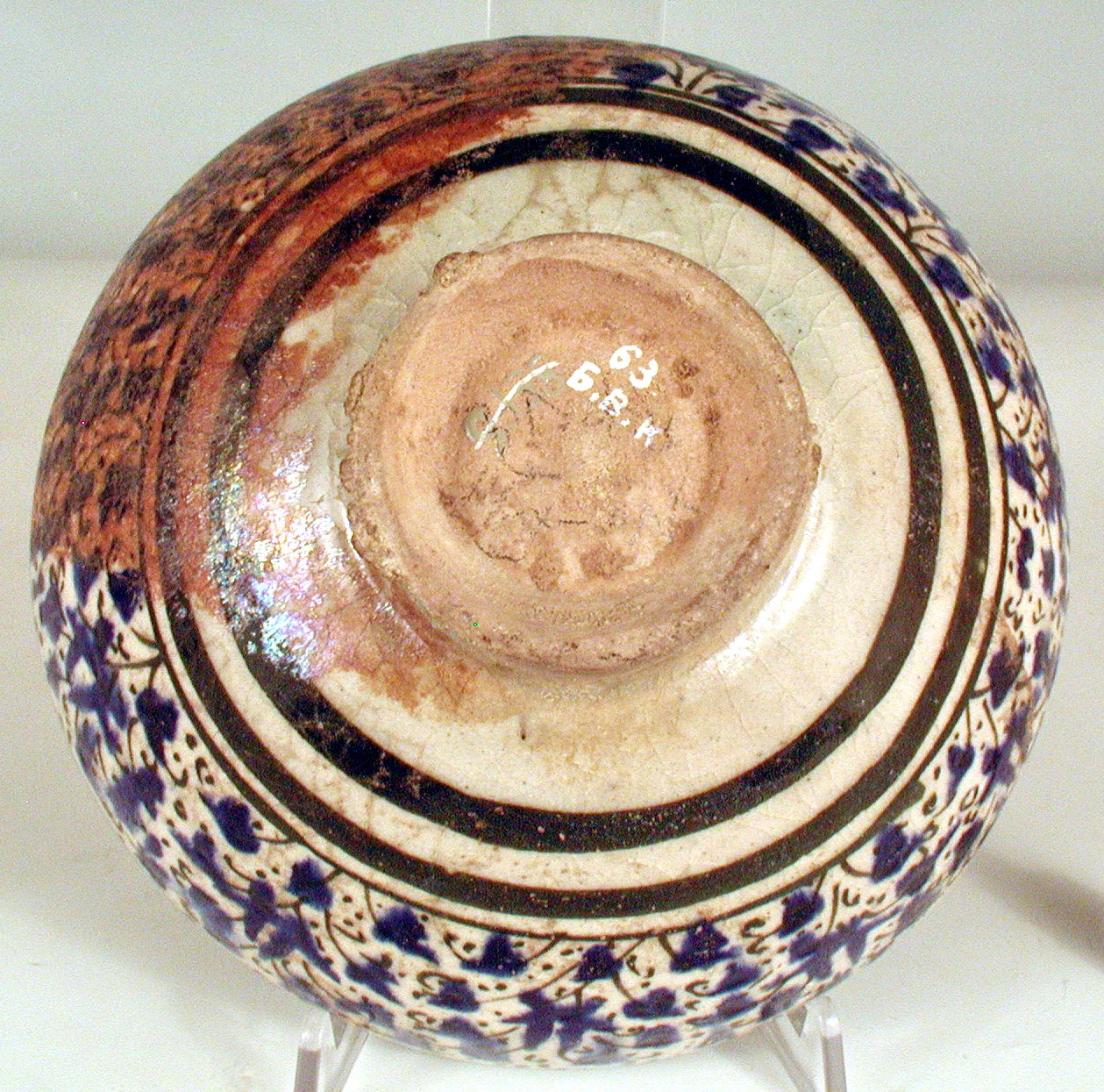
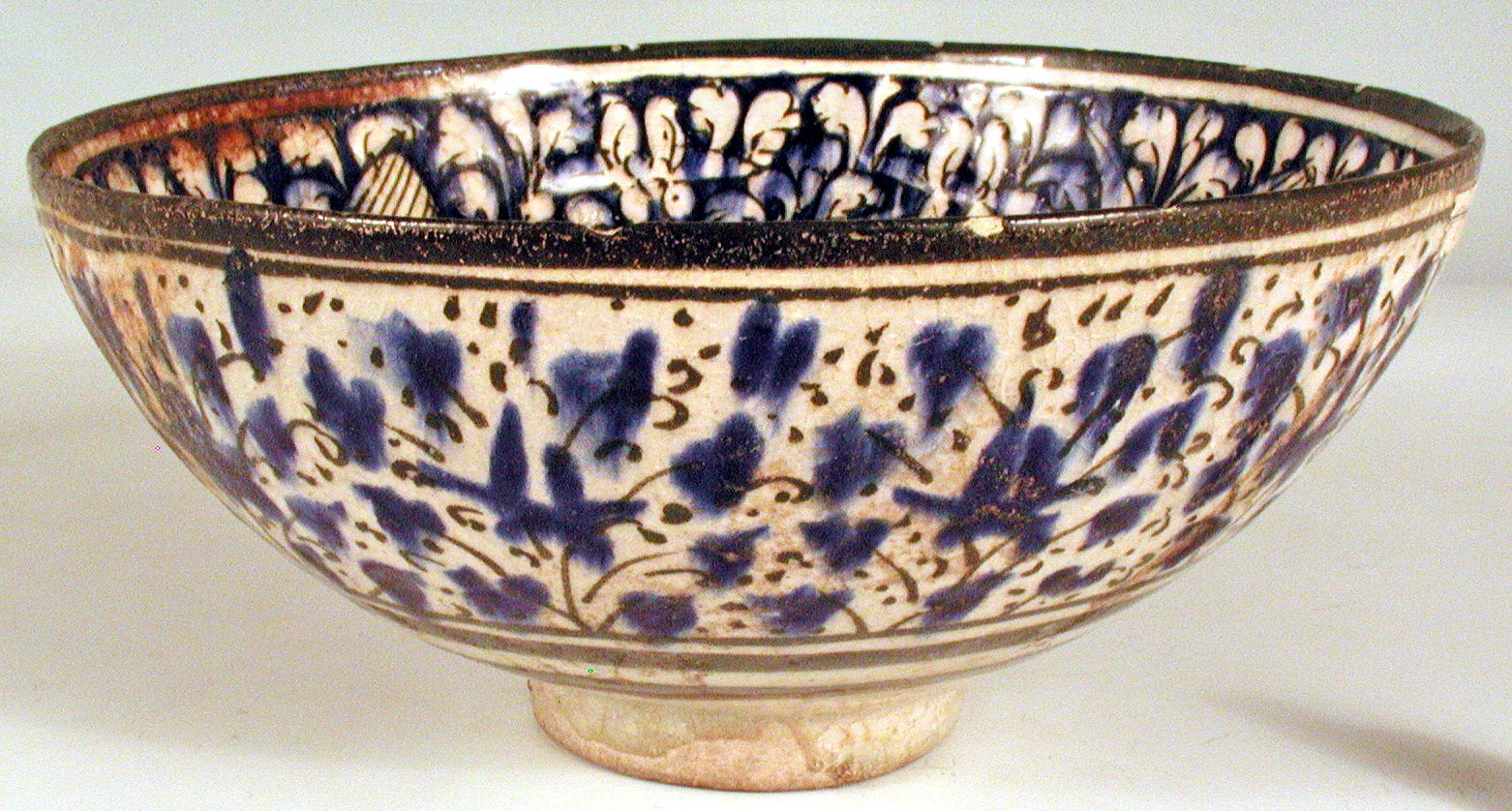
Ідентифікатори
63-БВ МХ
· тип: Інвентарний облік (#2) · статус: Актуально (#1) · від: 2025-01-21
Унікальний ідентифікатор: 913202408281110
Зовнішнє ID: KM-4326
Назви
- Чаша напівсферичної форми на кільцевій ніжці. [uk] · тип: Інвентарна (#5)
Класифікація
Матеріал і техніка
| Матеріал | Техніка |
|---|---|
| Фаянс #56 | біла полива #393 |
| Фаянс #56 | прозора полива #394 |
Групи зберігання
Мистецтво Близ. СходуОписи
uk
Комм.: Розпис синім (сполуки кобальту) і чорним (сполуки хрому) на сирій матовій білій поливі під прозорою поливою./Аналогіi: 1. Дуже близька: форма, колорит, композиція, мотиви: The Brooklyn Museum:
Bowl with Hare and Flying Simurghs (Phoenixes). Persian, 14th century. Ceramic, "Sultanabad" ware; fritware, painted in cobalt blue and black under a transparent glaze. 9.7 x 21 cm. Acc.# 12.57
http://www.brooklynmuseum.org/opencollection/objects/5832/Bowl_with_Hare_and_Flying_Simurghs_Phoenixes
2. Кольори розпису (частково), техніка, мотиви (дуже близько): the Al-Sabah Collection in Kuwait:
Bowl. Frit body, green-grey slip with decoration in white slip and black under a transparent glaze. Iran, (probably Kashan, Soltanabad ware). Late 13th-14th century. H- 11,6; D – 20. LNS 28C // Oliver Watson. Ceramics from Islamic Lands. Thames and Hudson, 2004. Стор.385
Там само: форма, колорит, декор зовнішньої поверхні:
Bowl. Frit body with underglaze painting in black, blue and turquoise. Iran, (probably Kashan, Soltanabad ware). Late 13th-14th century. H- 9; D – 21. Acc.# LNS 319 // Oliver Watson. Ceramics from Islamic Lands. Thames and Hudson, 2004. Стор. 382
3. Форма посудини, колорит (частково), композиція, мотиви: The British museum, London:
Bowl with seated figure in Mongol costume and border of phoenixes and lotus blossoms. Iran, early 14th c. CE. Fritware, painted in underglaze in black and blue. Acc.# ME OA 1952.2-14.6
http://depts.washington.edu/silkroad/museums/bm/bmpostmongolceramic.html
4. Колорит розпису, композиція, мотиви: Calouste Gulbenkian Museum, Lisbon:
Bowl. Iran; probably Kashan. Late 13th-14th century. Frit body with underglaze painting in blue, turquoise and black. D – 25,5. Acc.# 930
http://masterpieces.asemus.museum/masterpieces.aspx?o=a2a28d38-cca1-46a1-b31c-c4ff2fe99c5a
5. Форма, колорит, мотиви: The Ashmolean Museum, Oxford, UK:
Bowl with flying phoenixes against a foliate background. Iran, late 13th century - 1st half of the 14th century. Fritware, covered in grey slip with underglaze painting in white slip and black. 9.8 cm (height), 21.2 cm (diameter). Acc.# EA1956.59
http://jameelcentre.ashmolean.org/collection/3//sort_by/date/object/130
6. Форма посудини, колорит (частково), композиція, центральний мотив: The Victoria and Albert Museum, London:
Bowl. Iran (probably, Kashan). 1260-1350. Earthenware painted in white slip and black on a grey slip Diameter: 17.5 cm, Height: 7.3 cm. Acc.#C. 723-1909
http://collections.vam.ac.uk/item/O85369/bowl-unknown/
/Історія Атрибуціi: 1. Вязьмітіна М. «МКІ», 1930. Персія, 17-18 ст.
2. Гюзальян Л.Т. (Ерм., 1953). Іран, 17 ст.
3. Іванов А.А. (Ерм., 1966). Іран, Султанабад, 14 ст.
4. Стародуб Т.Х. (Издат. Сов. Энциклоп.). Розвинутий султанабадський стиль, І пол. 14 ст./Кількість: 1/Історія предмета, легенда: Encyclopædia Iranica:
“Sultanabad (Solṭānābād) ware,” on which floral and sometimes figural designs were built up in low relief in a heavy whitish slip, usually on a pale-gray ground (Plate xxxi). The individual elements are outlined in black and brown underglaze painting. There is also a type with a cobalt-blue or black-and-white, rather than gray, ground, but the effect is much the same. The crowded designs are almost “swallowed up” in dense, small-scale floral background patterns, sometimes interspersed with larger lotus blossoms, and few pieces achieve the monumentality of the earlier wares from which they were derived (Reitlinger, 1944-45; Lane, 1965, pp. 10ff.; Grube, 1976, pp. 261ff.; Soustiel, pp. 198ff.). This type was more widely distributed than any other and had the greatest impact on 8th/14th-century ceramic production both in Persia, where similar wares were probably produced in a great many centers, and outside Persia, where it was widely imitated.
Юаньська ваза з фенікссами
http://www.metmuseum.org/special/khubilai-khan/decorative-arts-and-textiles/jar-with-dragon-and-phoenix.aspx?oid=50141&s=4&p=2/Побутування/творiв такого типу: A piece that was dried in the open air or fired once was painted directly in blue or a few other colors. Cobalt blue could have a tendency to run into the glaze during firing and was consequently contoured at times with black, which was more stable.
This dish belongs to a fairly thick-walled group of pottery that was made in Il-Khanid Iran, probably in Kashan, although an older tradition allocated the type to the region of the modern city of Sultanabad. The dish’s form brings to mind imported Chinese porcelain, and many of the motifs on this pottery – phoenixes, cranes, deer, hares, and flowers – also have Far Eastern origins. The use of a thick slip is also typical. A related type of pottery was, however, also made in Syria.
Porcelain with decorations painted under the glaze was the most important Chinese export to the Middle East and then to Europe for several centuries from around 1325
Encyclopædia Iranica:
ʿErāq wares, a dealer’s term, appeared in Europe following their discovery during house build
uk
Розміри: 9,5 х 21,6
uk
Документи переміщення - Дата документа: 2021-12-25 00:00:00/NAMEDOC: Акт про приймання предметів на МВЗ/Дополнение: експонування в постійній експозиції музею/Дополнение: Корпачова Л.Т./Дополнение: Крамарева О.А.
uk
Сдатчик-частное лицо: колекція Б.І. та В.Н. Ханенків.
uk
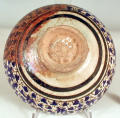
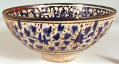
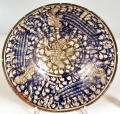
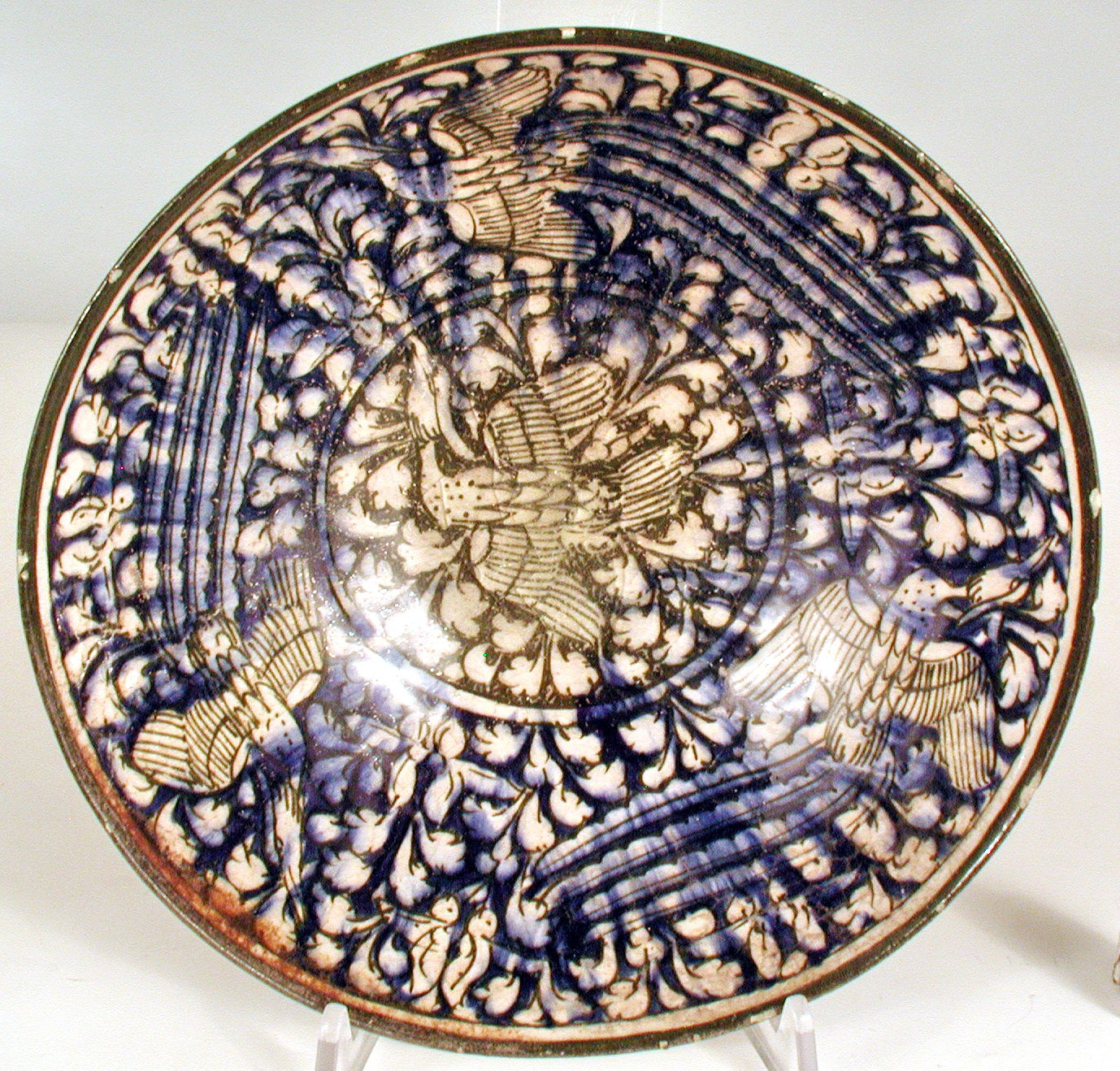
Закладка “Атрибуція” - Наим. предмета, издания: Чаша з синьо-чорним розписом/Змiн.додаток до назва (лист, ...): Чаша "султанабадського" типу з підглазурним розписом/Змiн.опис: Чаша глибока напівсферичної форми на вузькій кільцевій ніжці. Внутрішню поверхню оздоблено рясним малюнком білим на темно-сірому тлі, контури мотивів підкреслено тонкими чорними лініями, розпис на борті виділено напівпрозорим синім тоном. Композиція розпису складається з центрального круглого медальйону, в якому зображено фантастичного птаха з коротким хвостом на тлі пишного листя. Навколо розміщено зображення трьох довгохвостих фантастичних птахів, що летять «проти годинникової стрілки» на тлі листя та квітів (лотос) . Образи птахів трактовано подібно до китайського фенікса. Зовнішню поверхню прикрашено чорними рослинними мотивами та цятками на білому тлі, малюнок додатково виділено синім. Краєм борту проходить зеленкувато-чорна смуга, дві подібні смуги нанесено внизу, навколо ніжки чаші./Змiн. час створення: Перша половина 14 ст.місце створення, школа: ймовірно, КашанПериод: доба ІльханідівНовый материал: фаянсИзм. техника: біла поливаИзм. техника: прозора поливаИзм. техника: розпис синімИзм. техника: розпис чорним
uk
Край борту чаші у кількох місцях надщерблений. З одного боку велика темна пляма.,
Персоналії
Колекції
Характеристики
Стан
Розміри
Ціни
Події
| Тип | Місце (uk) | Місце (lat.) | Місце (other) | Дата (text) | Роки | Джерело | Коментар |
|---|---|---|---|---|---|---|---|
| Створення (#1) | Іран | XVII-XVIII ст. | — | — | — |
Gemstones
Дорогоцінні метали
Базові значення
- state: 1 (?? Статус предмета = На постійному зберіганні (#1) ??)
- Службова інформація - підпис (status): Чернетка (#1)
- Класифікація (classification_id): — #—
- Можливість транспортування (is_transportable): 0
- Держреєстр національного культурного надбання (is_registered): 0
- Топографічний шифр (topography_code): вітрина
- Спосіб надходження (acquisition_method): (#)
- Джерело надходження (acquisition_source): з зібрання Б. І. та В. Н. Ханенків
- external_id: KM-4326
- creator_id: 165
- updater_id: 165
- owner_id: 90
- keeper_id: 90
- is_fragment: 0 (?? Фрагмент = 0 ??)
- is_private_images: 0
- storage_location_id: —
- introduction_reason: —
- delete_reason: —