Зображення з Реєстру
Зображення з КАМІСу
Ідентифікатори
154-БВ МХ
· тип: Інвентарний облік (#2) · статус: Актуально (#1) · від: 2025-01-21
Унікальний ідентифікатор: 666202408281592
Зовнішнє ID: KM-4810
Назви
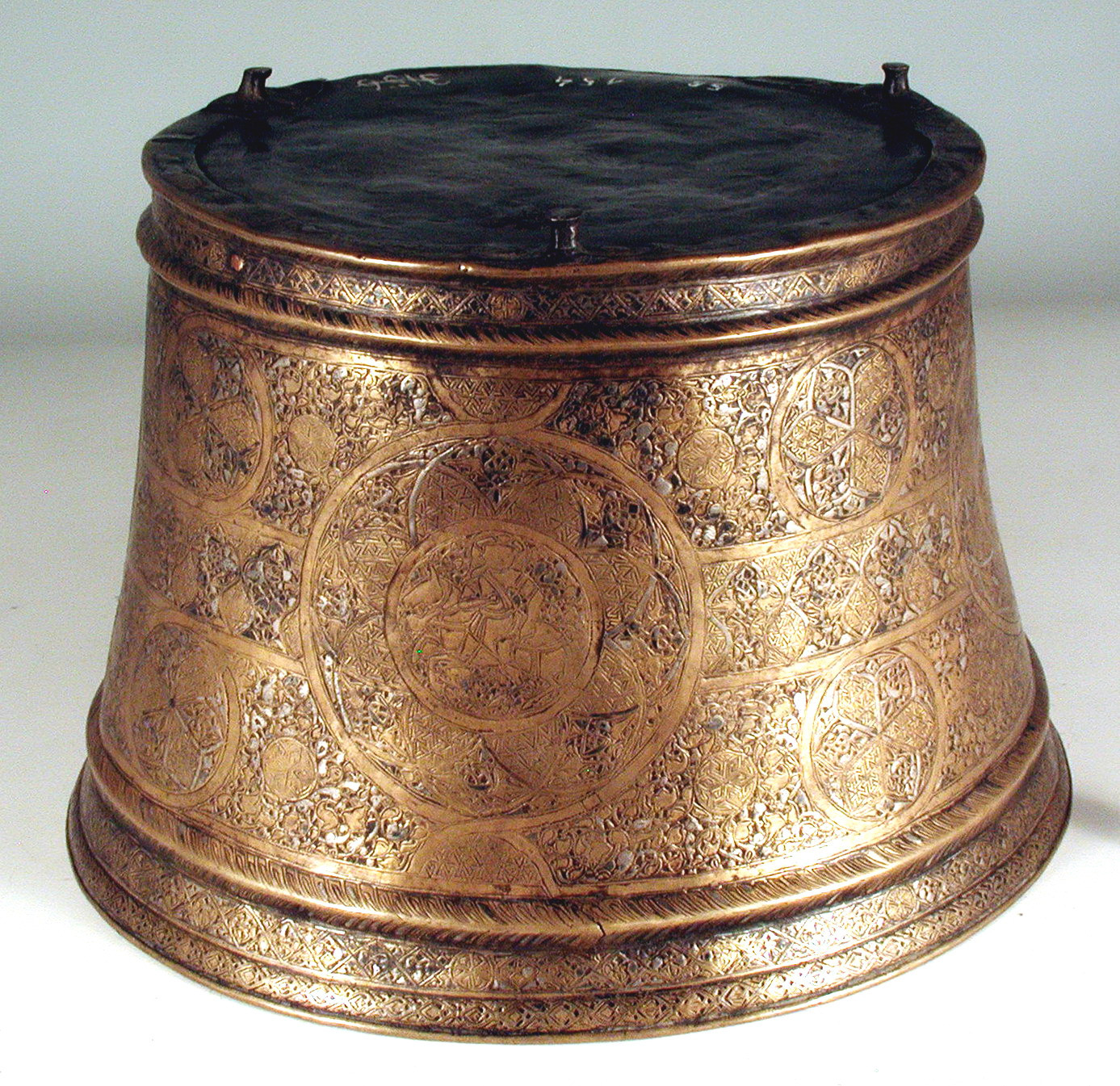
- Нижня частина свічника, кована, у вигляді усіченого конусу. [uk] · тип: Інвентарна (#5)
Класифікація
Матеріал і техніка
| Матеріал | Техніка |
|---|---|
| мідь жовта #645 | Кування #73 |
| Мідний сплав #283 | Карбування #71 |
Групи зберігання
Мистецтво Близ. СходуОписи
uk
Аналогіi: 1. За розробкою тла: Melikian-Chirvani... Стор. 64-72/Історія Атрибуціi: 1. Крачковська В. «Мус.искусств…»,1926. Група "мосульських бронз". Проробка тла зигзагами.
2. Вязьмітіна М. «МКІ», 1930. Мосул, 14 ст.
3. Гюзальян Л.Т. (Ерм., 1953). Південний Іран або Месопотамія, 1 пол. 14 ст.
4. Іванов А.А. (Ерм., 1960) Іран, 1 пол. 14 ст.
/Кількість: 1/Побутування/творiв такого типу: Although Mongol conquests initially brought devastation and affected the balance of artistic production, in a short period of time, the control of most of Asia by the Mongols—the so-called Pax Mongolica—created an environment of tremendous cultural exchange. Following the conversion to Islam of the Il-Khan Ghazan (r. 1295–1304) in 1295 and the establishment of his active cultural policy in support of his new religion, Islamic art flourished once again. East Asian elements absorbed into the existing Perso-Islamic repertoire created a new artistic vocabulary, one that was emulated from Anatolia to India, profoundly affecting artistic production.
During the Ilkhanid period, the decorative arts—textiles, pottery, metalwork, jewelry, and manuscript illumination and illustration—continued along and further developed established lines.
uk
Розміри: 18,3х28,5х22
uk
Документи переміщення - Дата документа: 2021-12-25 00:00:00/NAMEDOC: Акт про приймання предметів на МВЗ/Дополнение: експонування в постійній експозиції музею/Дополнение: Корпачова Л.Т./Дополнение: Крамарева О.А.
uk
Сдатчик-частное лицо: колекція Б.І. та В.Н. Ханенків.
uk
Закладка “Атрибуція” - Наим. предмета, издания: Основа свічника/Змiн. Написи, клейма, марки: Іванов А.А. 1960: напис є тільки на плечиках, але не видний під оловом та кіптявою./Змiн. час створення: перша половина 14 століттямісце створення, школа: ІранНовый материал: мідний сплавПериод: доба ІльханідівИзм. техника: куванняИзм. техника: карбуванняИзм. техника: інкрустація золотом та срібломИзм. техника: гравірування
uk
Задовільний.,
Персоналії
Колекції
Характеристики
Стан
Розміри
Ціни
Події
| Тип | Місце (uk) | Місце (lat.) | Місце (other) | Дата (text) | Роки | Джерело | Коментар |
|---|---|---|---|---|---|---|---|
| Створення (#1) | Мосул | XIV ст. | — | — | — |
Gemstones
Дорогоцінні метали
Базові значення
- state: 1 (?? Статус предмета = На постійному зберіганні (#1) ??)
- Службова інформація - підпис (status): Чернетка (#1)
- Класифікація (classification_id): — #—
- Можливість транспортування (is_transportable): 0
- Держреєстр національного культурного надбання (is_registered): 0
- Топографічний шифр (topography_code): над вітриною
- Спосіб надходження (acquisition_method): (#)
- Джерело надходження (acquisition_source): з зібрання Б. І. та В. Н. Ханенків
- external_id: KM-4810
- creator_id: 165
- updater_id: 165
- owner_id: 90
- keeper_id: 90
- is_fragment: 0 (?? Фрагмент = 0 ??)
- is_private_images: 0
- storage_location_id: —
- introduction_reason: —
- delete_reason: —