Зображення з Реєстру
Галерея
Зображення з КАМІСу
Галерея
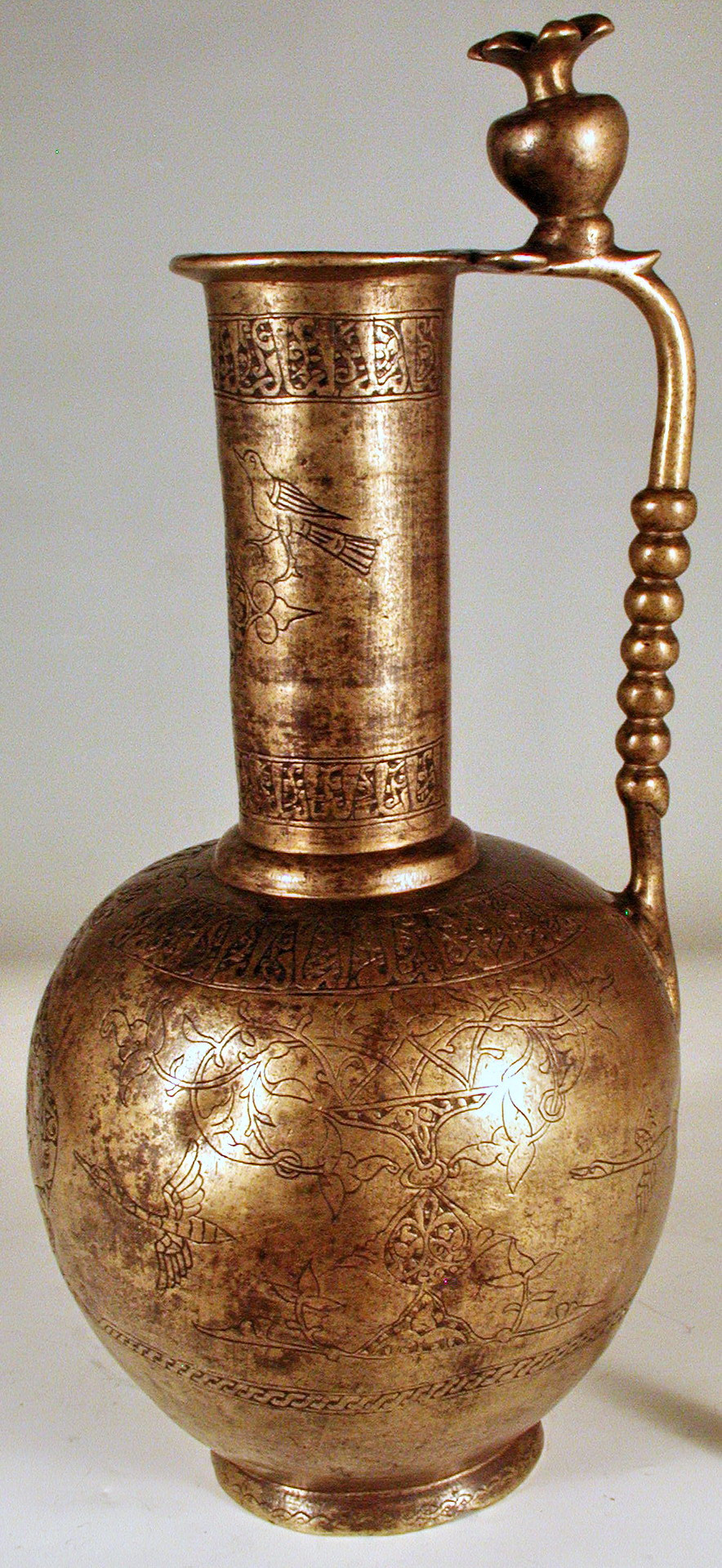
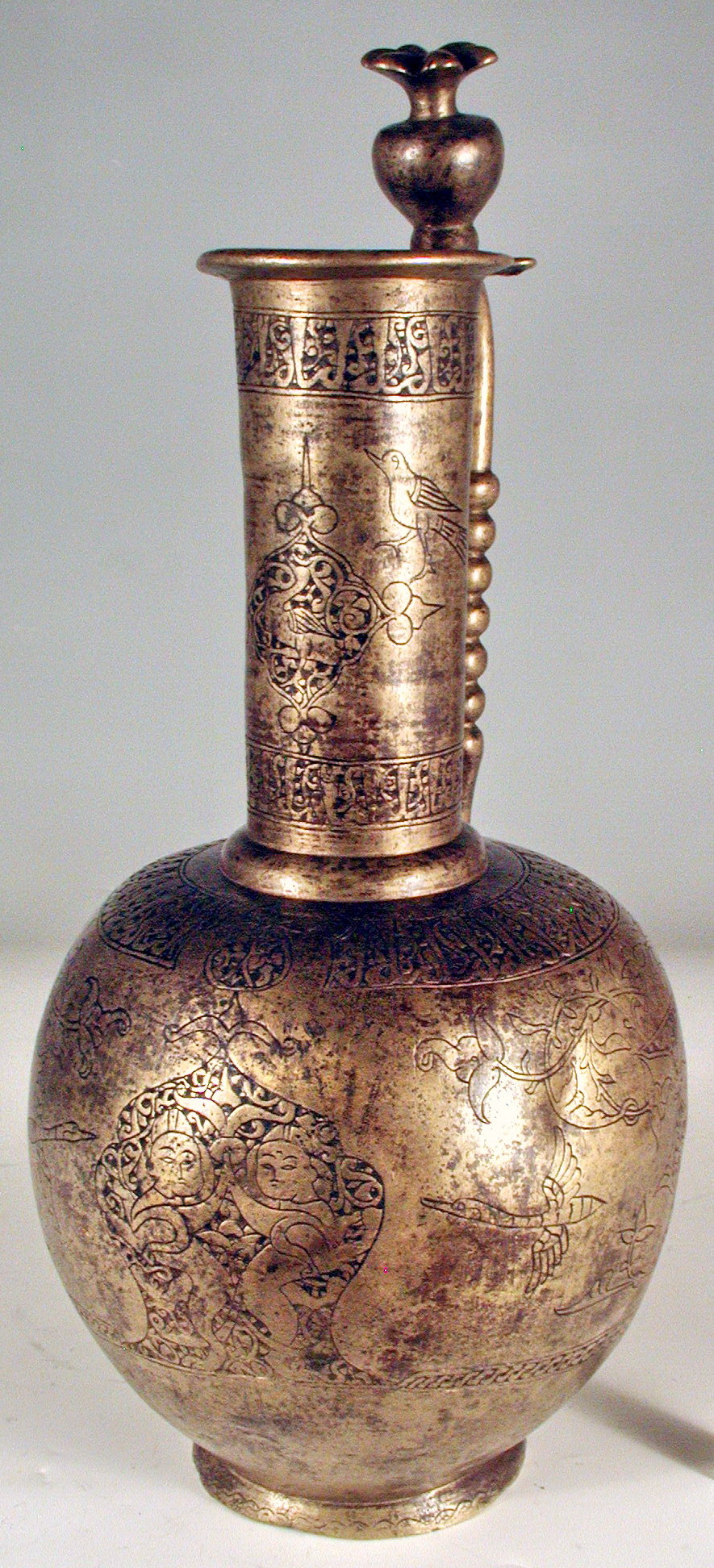
Ідентифікатори
165-БВ МХ
· тип: Інвентарний облік (#2) · статус: Актуально (#1) · від: 2025-01-21
Унікальний ідентифікатор: 341202408281604
Зовнішнє ID: KM-4822
Назви
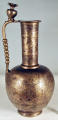
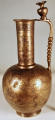
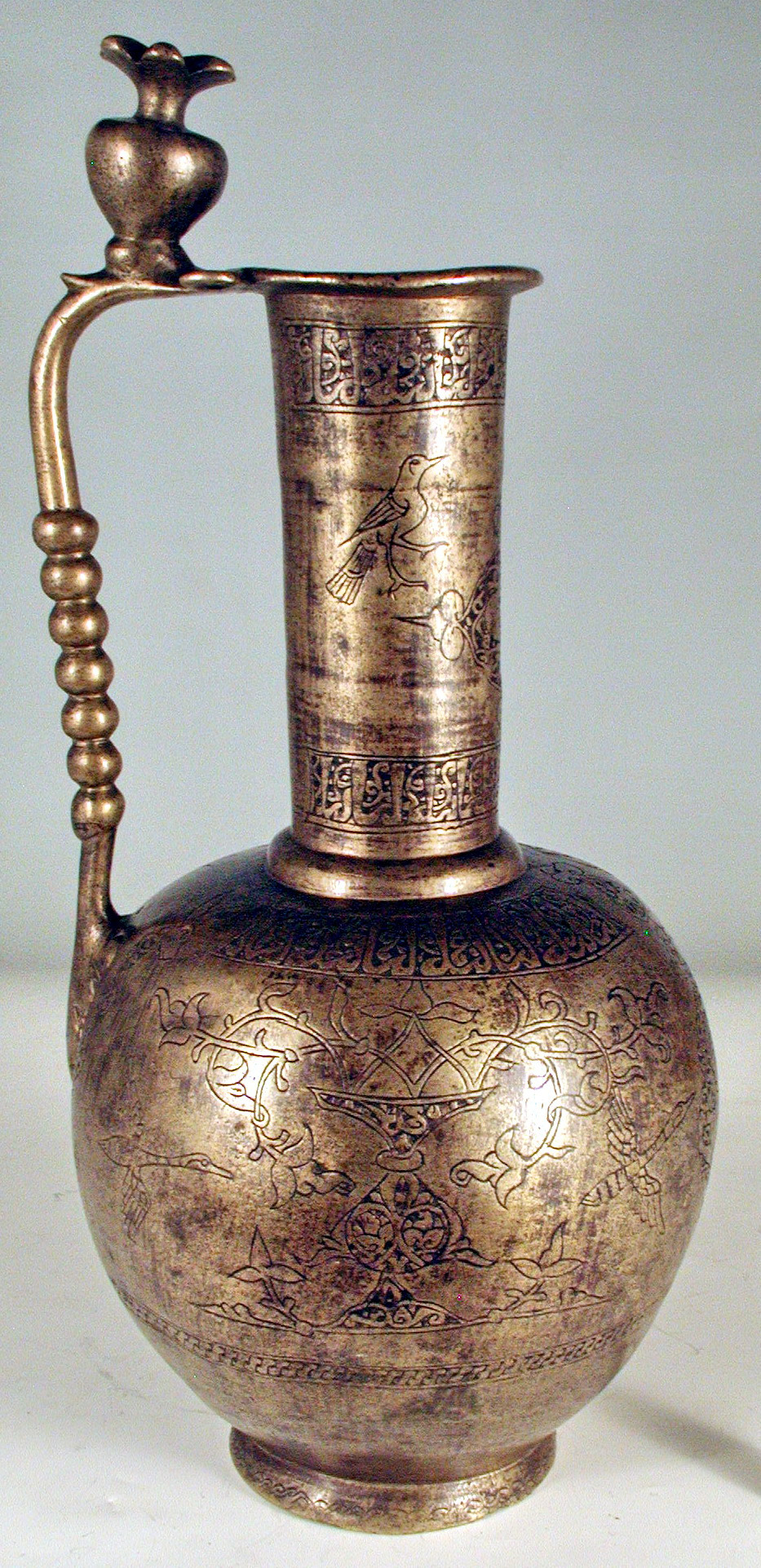
- Глек литий з круглим корпусом. [uk] · тип: Інвентарна (#5)
Класифікація
Матеріал і техніка
| Матеріал | Техніка |
|---|---|
| Бронза #287 | Кування #73 |
| Мідний сплав #283 | Карбування #71 |
Групи зберігання
Мистецтво Близ. СходуОписи
uk
Аналогіi: 1. MMA:
Ewer, 11th century, Found at the Tepe Madraseh, Nishapur, Iran, Bronze, cast and engraved
H. 14 1/8 in. (35.9 cm), Rogers Fund, 1938 (38.40.240)
http://www.metmuseum.org/toah/works-of-art/38.40.240
2. Louvre, MAO 1256: Ewer. 10th-11th centuries. Eastern Iran or Central Asia. Cast copper alloy with engraved, incised, and chased decoration. H. 33.3 cm; Diam. 15.5 cm
http://www.louvre.fr/llv/oeuvres/detail_notice.jsp?CONTENT%3C%3Ecnt_id=10134198673225880&CURRENT_LLV_NOTICE%3C%3Ecnt_id=10134198673225880&FOLDER%3C%3Efolder_id=9852723696500781&fromDept=true&baseIndex=12&bmLocale=en#
3.-4. Глеки литі. Ермітаж. Маршак Б.І. Бронзовый...стор. 73, мал. 8
5. Попередник за формою: Ewer, cast bronze. Iraq or Iran; 9th century. H. with knob: 27.7 cm. David Collection (Kopenhagen). The shape of this ewer, an ovoid body and a straight neck, was common in the 9th-10th century.
http://www.davidmus.dk/en/collections/islamic/dynasties/abbasiderne/art/Історія Атрибуціi: 1. Крачковська В. «Мус.искусств…»,1926. Среднеазиатский тип. 15 в. Аналогії в орнаментиці - сфінкси, арка. дракони - на ермітажних глеках (КИ 1244)
2. Вязьмітіна М. «МКІ», 1930. Сер. Азія, 15 ст.
3. Іванов А.А. (Ерм., 1960). Іран, Хорасан, найвірогідніше, 12-поч. 13 ст.
5. Маршак Б.И. (Эрм. 1975). 13 ст. Монгольський період, мотив птаха, що летить є китайським. Форма архаїчна, але орнамент 12-13 ст - вази, арочний медальйон, стиль насх.
6. Кильчевская Э.В. (Москва, 1978). Самарканд? Ранній."Мотив пантер" (?) також зустрічається в Середній Азії. Вільний відступ від традиції і метал світлий. Аналогія в Таджикентському музеї.
/Кількість: 1/Побутування/творiв такого типу: This metallic shape is well known in eastern Iran, where it can be dated to between the 9th and 11th centuries. This particular type of ewer has a certain number of superficial variations. The thumb-rest takes the form of a more or less stylized pomegranate: sometimes the fruit is suggested by a simple rounded motif.
These objects are cast and display a variety of decorations, such as plant or geometric motifs either in relief or engraved, votive inscriptions, and even figurative scenes.
A well-known group of objects
Within this rather large group, it is rare to find ewers that closely resemble the Louvre's piece with its rounded body, beaded handle, and large thumb-rest in the form of a pomegranate. A few well-documented pieces allow us to date and attribute this particular type. One, in the collections of the Metropolitan Museum in New York, was discovered during an excavation at Neyshabur (Nishapur). It indicates a geographic production zone in eastern Iran, as well as a 10th-11th century date, according to the excavators. This dating was recently confirmed by the discovery - during a rescue archaeology campaign near Tiberias in northern Israel - of a group of metal objects that included Fatimid and Byzantine coins. One of the coins bore the date of 1078. The Fatimid coins were not dated, but were inscribed with the name of the caliph al-Mustansir Billahn (1036-1094). The coins were found in three large earthenware jars, along with metal pieces from Iran and, possibly, from Damascus. Among these objects was a ewer very similar to that in the Louvre's collections.
Since the hoard's discovery in 1998, analyses have been performed on the various metal alloys. According to these, the alloys from eastern Iran (bronzes and high-tin bronzes) are quite distinct from those from the Near East. This cache of metal objects, which probably belonged to an artisan, shows that these ewers were exported far from their production site. Another similar ewer was found in Baghdad: the body is decorated with a small arcade similar to that on the piece in the Louvre's collections. We cannot precisely situate the centers where these objects were created, but they were probably located between eastern Iran and Central Asia, as indicated by the provenance of several ewers - one is from the site of Ghazni in Afghanistan, another was discovered at Merv (Sultan Kala) in Turkmenistan, and we know of three comparable examples that were discovered in Tajikistan. Additional clues to the production center for these works are provided by a ewer in the Martin Le Roy collection that was purchased in Kokand, and by one of five ewers in the Hermitage that were acquired in Samarkand.
This is a remarkably elaborate and fine example of a little-known type of ewer. Worthy of special note is the pomegranate finial on the handle;
uk
Розміри: 36 х 8 х 10
uk
Документи переміщення - Дата документа: 2021-12-25 00:00:00/NAMEDOC: Акт про приймання предметів на МВЗ/Дополнение: експонування в постійній експозиції музею/Дополнение: Корпачова Л.Т./Дополнение: Крамарева О.А.
uk
Сдатчик-частное лицо: колекція Б.І. та В.Н. Ханенків.
uk
Закладка “Атрибуція” - Наим. предмета, издания: глек/Змiн. Написи, клейма, марки: Епіграфічний орнамент, не читається/Змiн. час створення: 12 – початок 13 століттямісце створення, школа: ХорасанНовый материал: мідний сплавИзм. техника: куванняИзм. техника: карбуванняИзм. техника: гравіруванняПериод: доба Хорезмшахів
uk
Верхній край злегка погнутий.,
Персоналії
Колекції
Характеристики
Стан
Розміри
Ціни
Події
| Тип | Місце (uk) | Місце (lat.) | Місце (other) | Дата (text) | Роки | Джерело | Коментар |
|---|---|---|---|---|---|---|---|
| Створення (#1) | Середня Азія | XV ст. | — | — | — |
Gemstones
Дорогоцінні метали
Базові значення
- state: 1 (?? Статус предмета = На постійному зберіганні (#1) ??)
- Службова інформація - підпис (status): Чернетка (#1)
- Класифікація (classification_id): — #—
- Можливість транспортування (is_transportable): 0
- Держреєстр національного культурного надбання (is_registered): 0
- Топографічний шифр (topography_code): вітрина
- Спосіб надходження (acquisition_method): (#)
- Джерело надходження (acquisition_source): з зібрання Б. І. та В. Н. Ханенків
- external_id: KM-4822
- creator_id: 165
- updater_id: 165
- owner_id: 90
- keeper_id: 90
- is_fragment: 0 (?? Фрагмент = 0 ??)
- is_private_images: 0
- storage_location_id: —
- introduction_reason: —
- delete_reason: —