Зображення з Реєстру
Зображення з КАМІСу
Ідентифікатори
148-БВ МХ
· тип: Інвентарний облік (#2) · статус: Актуально (#1) · від: 2025-01-21
Унікальний ідентифікатор: 574202408281647
Зовнішнє ID: KM-4866
Назви
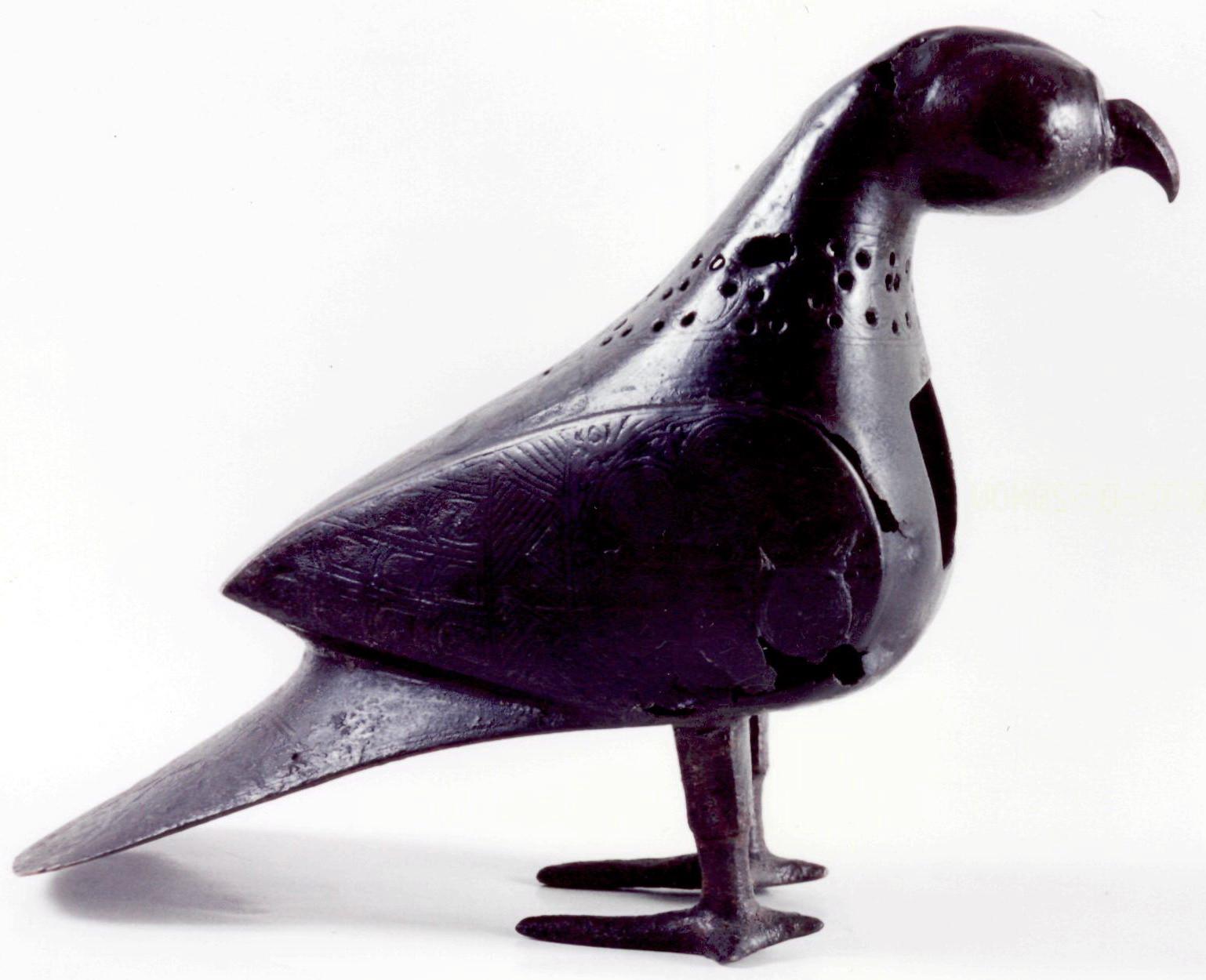
- Курильниця у вигляді стилізованого голуба. [uk] · тип: Інвентарна (#5)
Класифікація
Матеріал і техніка
| Матеріал | Техніка |
|---|---|
| Бронза #287 | Лиття #83 |
| Мідний сплав #283 | Перфорація #248 |
Групи зберігання
Мистецтво Близ. СходуОписи
uk
Аналогіi: 1. The Nasser D. Khalili Collection # MTW 100:
Incense burner. Khorasan, 12 c. Quaternary alloy, cast with openwork and engraved decoration. H 17 cm. // Piotrovsky. Earthly beauty... # 206, стор. 230
2. http://www.pbase.com/bmcmorrow/image/125946745
Incense burner in the shape of a bird, Iran, 12th C. /Qatar Museum of Islamic Art - Collection
3. Aga Khan Museum ():
Incense Burner, Sicily (?), 11-12 c. Bronze
http://www.akdn.org/museum/detail.asp?artifactid=1202
/Історія Атрибуціi: 1. Гюзальян Л.Т. (Ерм., 1953). Сирія, 12 ст.
2. Іванов А.А. (Ерм., 1960). Іран, Хорасан, 12 ст.
3. Маршак Б.І. (Ерм. 1975). Іран, Хорасан, 11 ст.
4. Кільчевская Е.В. (Москва, 1978). 11-12 ст.
/Кількість: 1/Побутування/творiв такого типу: Incense was used in the Islamic world to scent people and air alike with a fragrant mix of aloes (wood), frankincense and ambergris. According to the historian al-Mas'udi, guests of the ninth-century caliph al-Ma'mun (r. 813-33 CE) were offered an incense burner to perfume themselves before meeting with him (Bloom and Blair 1997, p. 120). Metalwork incense burners were made in a variety of shapes, including animal forms such as lions and birds, which were associated with paradise and good fortune. The head and neck of this piece are hinged to facilitate the placement of the incense, which when burned would emit fragrant smoke through the body’s pierced decoration. A masterpiece of mediaeval bronze casting, this incense burner is a representation of a variety of pigeon called “scandaroon”, a distortion of the name of the Turkish town Iskenderun, itself derived from the name Iskandar (Alexander the Great). This species originated in Iraq and spread westward across the Mediterranean.
Perfume was widely used throughout the Islamic world, giving rise to a number of different types of utensil: mainly small phials for essential oils and sprinklers for rose-water or orange-flower water, but also incense burners, for use in domestic interiors. Aloeswood and incense were the essences most commonly burned.
uk
Розміри: В – 18; Довж. – 26
uk
Документи переміщення - Дата документа: 2021-12-25 00:00:00/NAMEDOC: Акт про приймання предметів на МВЗ/Дополнение: експонування в постійній експозиції музею/Дополнение: Корпачова Л.Т./Дополнение: Крамарева О.А.
uk
Сдатчик-частное лицо: колекція Б.І. та В.Н. Ханенків.
uk
Закладка “Атрибуція” - Наим. предмета, издания: Курильниця у формі голуба/Змiн. Написи, клейма, марки: Іванов А.А. (1960):
арабський напис куфічним шрифтом: "зі щастям та благословінням"/Змiн. час створення: 11-12 ст.місце створення, школа: Іранмісце створення, школа: ХорасанНовый материал: мідний сплавИзм. техника: литтяИзм. техника: перфораціяИзм. техника: гравірування
uk
Втрачена висувна шухлядка. Відбито кілька шматків. Відламано ніжки.,
Персоналії
Колекції
Характеристики
Стан
Розміри
Ціни
Події
| Тип | Місце (uk) | Місце (lat.) | Місце (other) | Дата (text) | Роки | Джерело | Коментар |
|---|---|---|---|---|---|---|---|
| Створення (#1) | Сирія | XI ст. | — | — | — |
Gemstones
Дорогоцінні метали
Базові значення
- state: 1 (?? Статус предмета = На постійному зберіганні (#1) ??)
- Службова інформація - підпис (status): Чернетка (#1)
- Класифікація (classification_id): — #—
- Можливість транспортування (is_transportable): 0
- Держреєстр національного культурного надбання (is_registered): 0
- Топографічний шифр (topography_code): вітрина
- Спосіб надходження (acquisition_method): (#)
- Джерело надходження (acquisition_source): з зібрання Б. І. та В. Н. Ханенків
- external_id: KM-4866
- creator_id: 165
- updater_id: 165
- owner_id: 90
- keeper_id: 90
- is_fragment: 0 (?? Фрагмент = 0 ??)
- is_private_images: 0
- storage_location_id: —
- introduction_reason: —
- delete_reason: —