Зображення з Реєстру
Зображення з КАМІСу
Ідентифікатори
592-ДВ МХ
· тип: Інвентарний облік (#2) · статус: Актуально (#1) · від: 2025-01-21
Унікальний ідентифікатор: 838202408282351
Зовнішнє ID: KM-7258
Назви
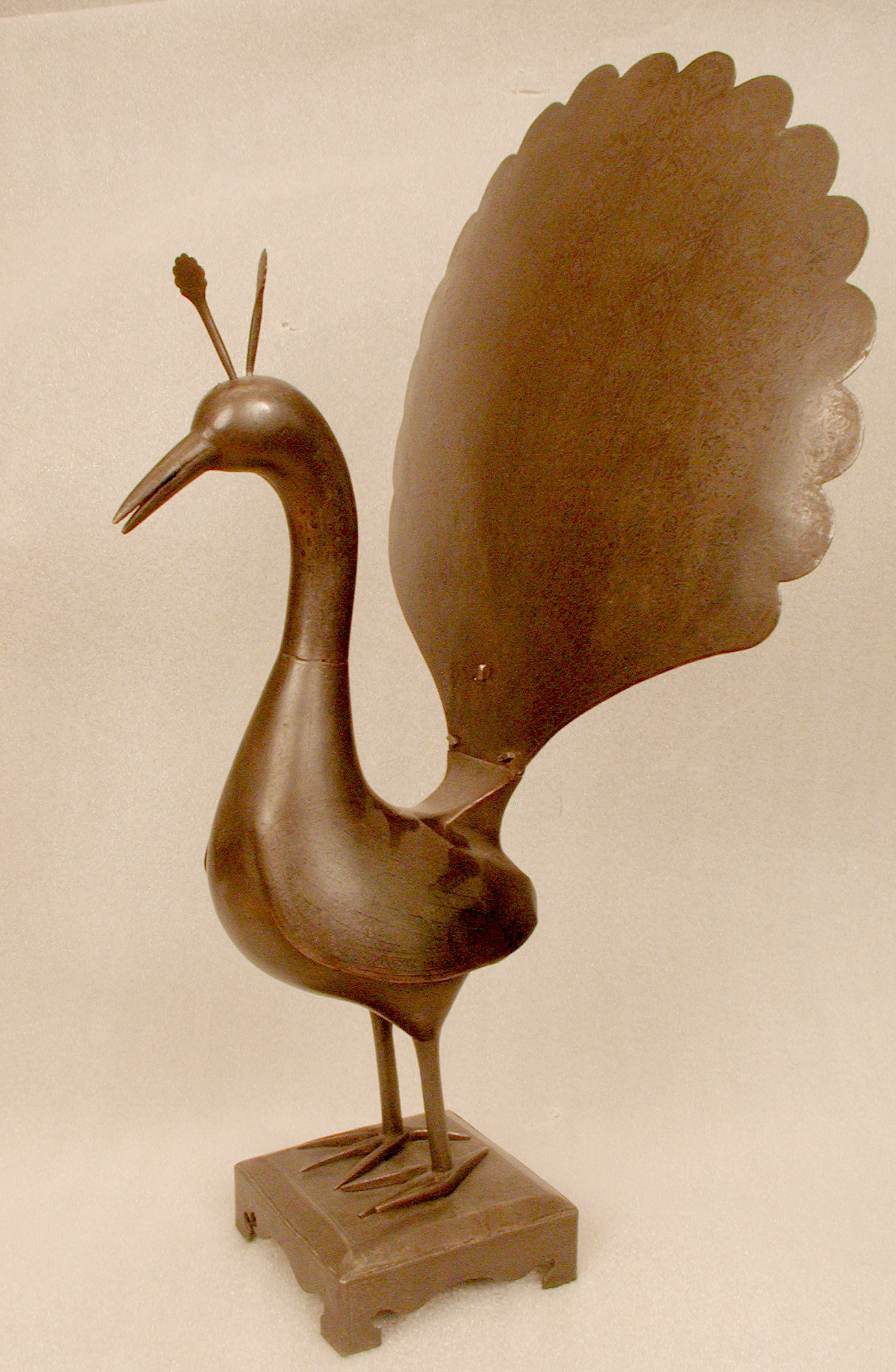
- Статуетка пави. [uk] · тип: Інвентарна (#5)
Класифікація
Матеріал і техніка
| Матеріал | Техніка |
|---|---|
| Сталь #302 | Лиття #83 |
| Бронза #287 | насічка сріблом #416 |
Групи зберігання
Мистецтво Дал. СходуОписи
uk
Аналогіi: 1. A PAIR OF DAMASCENED STEEL PEACOCKS WITH OPENWORK TAILS, IRAN, EARLY 20TH CENTURY
http://www.christies.com/LotFinder/lot_details.aspx?intObjectID=5186590
2. Steel peacock. Iran, 19 century. The British Museum, ME OA 1912.7-16.1, AN30546001
http://www.britishmuseum.org/explore/highlights/highlight_objects/me/s/steel_peacock.aspx
3. http://www.christies.com/LotFinder/lot_details.aspx?intObjectID=4168318
/Історія Атрибуціi: 1. Індія, 19 ст. (стара картка)?
2. Іванов А.А. (Ермітаж, 1960). Іран. 19 ст./Кількість: 1/Зв'язок з іншими предм. музею: аналог № 591/Побутування/творiв такого типу: Peacocks were symbols of beauty and the pleasures of the court throughout the Islamic world. The birds were often allowed to wander around the gardens of noblemen and models of peacocks ornamented the famous Peacock Throne taken from India to Iran by Nadir Shah in 1739. They also had a strong association with Shi'i and Sufi iconography.
First the peacock was thought to represent Ahriman, the 'devil' of Iranian mythology and was associated with the Yazidi devil worshippers, a small sect found in Kurdistan.
R. Ward, Islamic metalwork (London, The British Museum Press, 1993)
The motif of two peacocks, one on each side of the Tree of Life, is a well-known feature of Persian decorative arts.
The peacock in paradise
The peacock is a favorite motif in Islamic art. Although according to the Koran it was expelled together with Adam and Eve, popular tradition continued to see it as an inhabitant of Eden. It had connotations of Paradise, here confirmed by the idyllic nature of its surroundings.
uk
Розміри: В- 61см
uk
Документи переміщення - Дата документа: 2021-12-25 00:00:00/NAMEDOC: Акт про приймання предметів на МВЗ/Дополнение: експонування в постійній експозиції музею/Дополнение: Корпачова Л.Т./Дополнение: Крамарева О.А.
uk
Сдатчик-частное лицо: колекція Б.І. та В.Н. Ханенків.
uk
Закладка “Атрибуція” - Наим. предмета, издания: Павич/Змiн. час створення: XIX ст.місце створення, школа: ІранНовый материал: стальПериод: доба КаджарівИзм. техника: литтяИзм. техника: насічка срібломИзм. техника: насічка золотомИзм. техника: гравірування
uk
викручена одна ніжка.,
Персоналії
Колекції
Характеристики
Стан
Розміри
Ціни
Події
| Тип | Місце (uk) | Місце (lat.) | Місце (other) | Дата (text) | Роки | Джерело | Коментар |
|---|---|---|---|---|---|---|---|
| Створення (#1) | Індія | — | — | — | — |
Gemstones
Дорогоцінні метали
Базові значення
- state: 1 (?? Статус предмета = На постійному зберіганні (#1) ??)
- Службова інформація - підпис (status): Чернетка (#1)
- Класифікація (classification_id): — #—
- Можливість транспортування (is_transportable): 0
- Держреєстр національного культурного надбання (is_registered): 0
- Топографічний шифр (topography_code): над вітриною
- Спосіб надходження (acquisition_method): (#)
- Джерело надходження (acquisition_source): з зібрання Б. І. та В. Н. Ханенків
- external_id: KM-7258
- creator_id: 165
- updater_id: 165
- owner_id: 90
- keeper_id: 90
- is_fragment: 0 (?? Фрагмент = 0 ??)
- is_private_images: 0
- storage_location_id: —
- introduction_reason: —
- delete_reason: —