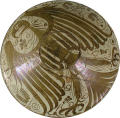
Зображення з Реєстру
Галерея
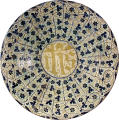
Зображення з КАМІСу

Галерея

Ідентифікатори
1351-БВ МХ
· тип: Інвентарний облік (#2) · статус: Актуально (#1) · від: 2025-01-21
227 ФК
· тип: Інвентарний облік (#2) · статус: Неактуально (#2) · від: 2025-01-21
Унікальний ідентифікатор: 765202408296307
Зовнішнє ID: KM-18591
Назви
- Блюдо [uk] · тип: Інвентарна (#5)
Класифікація
Матеріал і техніка
| Матеріал | Техніка |
|---|---|
| кашин (фаянс) #560 | олов'яна полива #439 |
| Глина #50 | розпис кобальтом #440 |
Групи зберігання
Мистецтво Близ. СходуОписи
uk
Додаток до назва (лист, ...): з наклоними стінками/Аналогіi: 1.Espagne, Manises, vers 1450. Plat au monogramme du Christ, IHS. Faïence lustrée. Musée du Louvre // http://cartelfr.louvre.fr/cartelfr/visite?srv=car_not_frame&idNotice=5073
2. CUENCO DE REFLEJO DORADO CON INSCRIPCIÓN “IHS”
Manises. Nº inv.: CE1/01563. Mediados del siglo XV
Sala de la cerámica mudéjar, segunda planta
Museo Nacional de Cerámica y Artes Suntuarias “González Martí”
http://www.mcu.es/museos/docs/MC/NocheDiaMuseos2010/7_CERAMICA_cuenco.pdf
3. http://cartelfr.louvre.fr/cartelfr/visite?srv=car_not_frame&idNotice=5061
4. Bassin d'aiguiere, valencia-Manises, seconde moitie du XV siecle, D-42,5. VAM, Londres// C. Fregnac... стор. 32
5. http://www.metmuseum.org/toah/works-of-art/56.171.156/
http://www.flg.es/ficha.asp?ID=122
http://collections.vam.ac.uk/item/O161791/bowl/
http://www.metmuseum.org/Collections/search-the-collections/170003537/Кількість: 1/Побутування/творiв такого типу: http://www.mcu.es/museos/docs/MC/NocheDiaMuseos2010/7_CERAMICA_cuenco.pdf
Este cuenco de base cóncava está decorado con motivos vegetales en azul de cobalto y reflejo dorado. Se trata de hojas de perejil y brionias o rosáceas de seis pétalos. En el centro, podemos observar el anagrama de Jesús en carácteres góticos “IHS”. Procedería del nombre de Jesús en griego: Ihsoys. Sin embargo el olvido del origen del monograma dio lugar a etimologías populares entre las cuales la más conocida es de la de “Iesus Hominis Salvator”, o Jesús Salvador de los Hombres.
Este cuenco pertenece a un grupo de piezas en las cuales, al darles un giro de 90º, las letras IHS en su grafía gótica pueden leerse como “Al-Mulk” en grafía árabe.
La inscripción “Al-Mulk” significa “el señorío, el reino, el poder”; es el nombre del capítulo o surat 67 del Corán que se refiere a Malik al Mulk, literalmente “el señor del reino”, uno de los 99 nombres de Alá. Se trata de un motivo decorativo epigráfico que, al igual que otras palabras y frases de carácter eulógico (es decir, que expresan bendición), aparece en numerosos objetos islámicos de cerámica, madera, marfil o metal.
Esta doble referencia epigráfica a dos religiones distintas, el cristianismo y el Islam, nos habla de la convivencia de ambas tradiciones y la adopción de los símbolos cristianos por los alfareros, en su mayoría, musulmanes. En efecto, al decorar las piezas con el anagrama IHS, los alfareros se aseguraban la clientela cristiana al tiempo que seguían fieles a sus creencias y en buenos términos con sus correligionarios.
http://www.museuceramica.bcn.es/english/colecc/ceramica_valenciana.htm
Lustre tableware and objects
Late 14th century to 18th century
The Manises and Paterna potteries, which after the Reconquest remained in the hands of the Morisco potters – Mudejars who had converted to Christianity – made luxury tableware for popes, monarchs and the nobility of all of Europe.
The techniques of lustreware came from the Near East, where they were used from the 9th century to decorate the tableware of the Caliphs. They were introduced into Al Andalus during the 12th century, and from the late 14th century they came into use in Valencia.
The more primitive pieces (late 14th-early 15th century), which are often decorated in blue and gold as in Málaga, remain close to the Islamic spirit.
The more refined pieces (15th century) combine iconographic elements of Islamic origin with Christian-Gothic ones: figures and fantastic animals, a wide range of plant motifs, and a great variety of coats-of-arms of the nobility.
From the 16th century lustreware began to lose prestige in the European market. Potters used models from goldsmiths’ work for the design of their shapes: gadroons, cords and central bosses.
In the 17th and 18th centuries lustreware was made only for the local market. The colour blue was hardly used, while the rare figurative subjects were highly stylised, designs being applied with a thicker brush. This was the period of popularisation and decadence.
TECHNIQUE Tin-glazed pottery was decorated with a mixture of silver, copper oxide, cinnabar and iron oxide diluted in vinegar, before being fired for a third time in a reducing atmosphere. To obtain the necessary chemical reaction, it was essential to cover the chimneys to keep the smoke inside the oven and not to allow the temperature to rise above six hundred degrees. The pieces came out blackened, and the lustre did not appear until they had been burnished.
The technique of lusterware involves the use of a copper oxide which, when painted on in the desired patterns and fired separately, produced a metallic sheen in tones ranging from pale gold to deep reddish copper depending on the proportions of the mixture. This bowl, probably a remnant of a larger table service, was made for export for the Dazzi family of Florence, whose arms it bears. Italy was a major market for
uk
Розміри: h - 5. Д. дна - 10. д. - 38/Розміри (англ.): h - 5. Д. дна - 10. д. - 38/Розміри (русск.): h - 5. Д. дна - 10. д. - 38
uk
Документи переміщення - Дата документа: 2007-07-19 10:43:54/NAMEDOC: Акт про приймання предметів на МВЗ/Дополнение: передача на матеріально-відповідальне зберігання/Дополнение: Біленко Г.І./Дополнение: Рудик Г.Б.
uk
Документи переміщення - Дата документа: 2011-01-28 00:00:00/NAMEDOC: Акт про видачу предметів на тимчасове зберігання/Дополнение: для проведення реставраційних робіт/Место экспонирования (организация): Національний науково-дослідний реставраційний центр України
uk
Документи переміщення - Дата документа: 2017-05-15 00:00:00/NAMEDOC: Акт про ВМП (видача)/Дополнение: експонування на виставцi/Выставка: До Дня музеїв 2017/Дополнение: Біленко Г.І./Дополнение: Корпачова Л.Т.
uk
Документи переміщення - Дата документа: 2018-03-13 00:00:00/NAMEDOC: Акт про ВМП (повернення)/Дополнение: після експонування в постійній експозиції музею/Дополнение: Біленко Г.І./Дополнение: Корпачова Л.Т.
uk
Документи переміщення - Дата документа: 2022-02-22 00:00:00/NAMEDOC: Акт про приймання предметів на МВЗ/Дополнение: передача на матеріально-відповідальне зберігання/Дополнение: Новікова О.В.
uk
Виставки: До Дня музеїв 2017
uk
Закладка “Атрибуція” - Наим. предмета, издания: Таріль/Змiн. час створення: Середина 15 ст.Новый материал: глинамісце створення, школа: МанізесИзм. техника: олов'яна поливаИзм. техника: розпис кобальтом
uk
На борту два наскрізних отвори. Блюдо складається з 5 зклеєних шматків. Борти потерті.,
Персоналії
Колекції
Характеристики
Стан
Розміри
Ціни
Події
| Тип | Місце (uk) | Місце (lat.) | Місце (other) | Дата (text) | Роки | Джерело | Коментар |
|---|---|---|---|---|---|---|---|
| Створення (#1) | Іспанія, Валенсія | XV ст. | — | — | — |
Gemstones
Дорогоцінні метали
Базові значення
- state: 1 (?? Статус предмета = На постійному зберіганні (#1) ??)
- Службова інформація - підпис (status): Чернетка (#1)
- Класифікація (classification_id): — #—
- Можливість транспортування (is_transportable): 0
- Держреєстр національного культурного надбання (is_registered): 0
- Топографічний шифр (topography_code): полиця
- Спосіб надходження (acquisition_method): (#)
- Джерело надходження (acquisition_source): —
- external_id: KM-18591
- creator_id: 165
- updater_id: 165
- owner_id: 90
- keeper_id: 90
- is_fragment: 0 (?? Фрагмент = 0 ??)
- is_private_images: 0
- storage_location_id: —
- introduction_reason: —
- delete_reason: —