Зображення з Реєстру
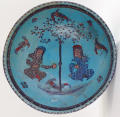
Галерея
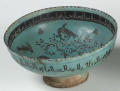
Зображення з КАМІСу
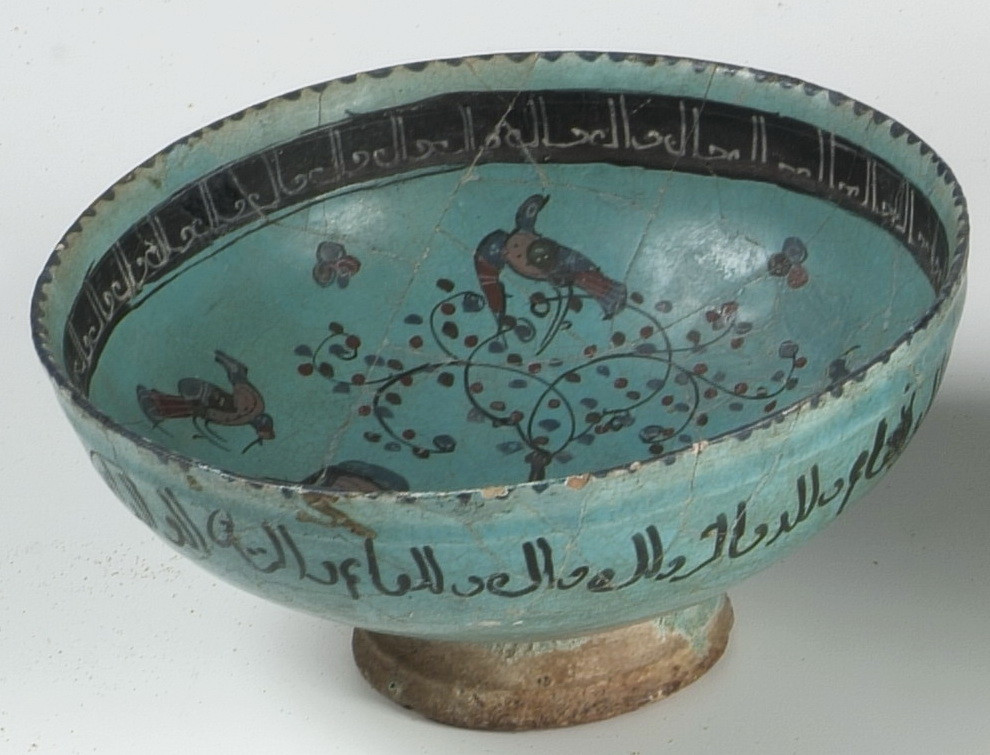
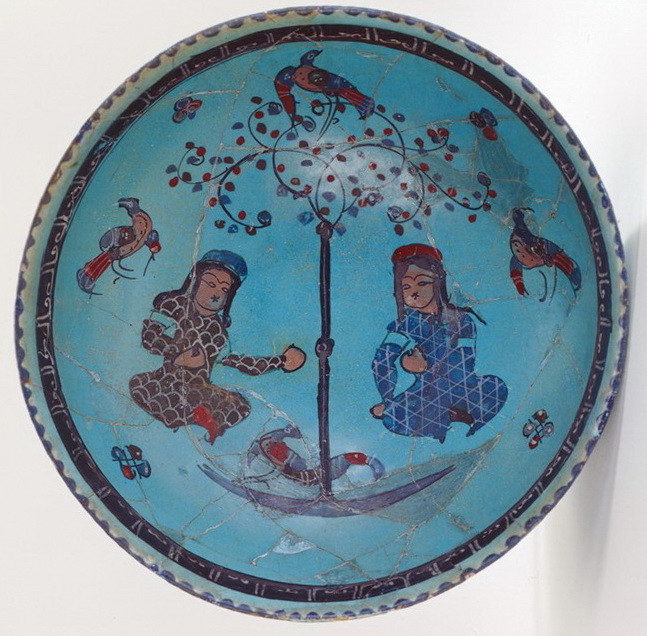
Галерея
Ідентифікатори
697-БВ МХ
· тип: Інвентарний облік (#2) · статус: Актуально (#1) · від: 2025-01-21
1166-ПН
· тип: Первинна реєстрація ОФ (#1) · статус: Актуально (#1) · від: 2025-01-21
Унікальний ідентифікатор: 981202408281035
Зовнішнє ID: KM-4251
Назви
- Чаша напівсферична. [uk] · тип: Інвентарна (#5)
Класифікація
Матеріал і техніка
| Матеріал | Техніка |
|---|---|
| Фаянс #56 | поліхромний розпис #353 |
| Фаянс #56 | бірюзова полива #419 |
Групи зберігання
Мистецтво Близ. СходуОписи
uk
Авторські підписи, клейма: Арабський напис на зовнішньому краї: "Довга слава, великий успіх, ... постійна перемога, довга слава, зростання величі, панування, щастя, довга слава, панування..." Всередині, уздовж краю - епіграфічний орнамент/Комм.: Знаменитою стала винайдена іранцями техніка яскравого розпису haft-rang - "у сім барв", пізніше названа антикварами "мінаї" (від перс."скляний, емалевидний"). Виробництво посуду мінаї також повязують з Кашаном. Як і люстри, мінаї також піддавалися подтрійному випалу - спершу випалювалася форма, потім розписану тугоплавкими пігментами (синій кобальт, бірюзовий) по сирій матовій молочно-білій чи блакитній поливі річ випалювали вдруге за високої температури, а вже за цим, нанісши надглазурний розпис різнобарвними легкоплавкими емалями (чорно-коричневою та червоною) та золотом, піддавали третьому низькотемпературному випалу, результатом чого ставав винятковий у своїй вишуканості твір.
Book painting, both illumination and illustration, had a marked impact on the decorative ceramic tradition of the Islamic Near East in the twelfth and thirteenth centuries. The underglaze-painting technique (see no. 10 [EA1978.2311]) had one serious limitation – colour: it was confined to blue and black. In northern Iran, probably in Kashan, was developed the technique of overglaze painting, painting onto the cold glaze with enamel colours which were then fixed in a final, low temperature firing. This enabled the potters to copy and develop the more highly-coloured, artistic ideas already in use among book painters. Objects decorated in the overglaze technique are normally called Minai-ware, from the Arabic word mina, ‘glaze’.
On the upper bowl [EAX.3102] the blue is under the glaze, the gold and red over it. The central geometric design is probably inspired by a Quranic frontispiece, while the gilded letters, their red outlines, and the four ornamental dividers can also be compared to the calligraphy and illumination of luxuriant Quranic manuscripts. The words on the inside of the rim, in kufic geometric script, are purely ornamental. Those in cursive script on the inside of the body, on the other hand, wish the owner good fortune, using such sentiments as eternal glory, increasing prosperity, happiness, peace, generosity and perpetuity!
In contrast, the two figures on the lower bowl [EA1956.36] most probably derive from textile designs, in which symmetrical compositions have great technical, and therefore economic, advantages. Moreover, paired horsemen or paired, confronted animals and birds, are common on surviving, early Islamic silks. ‘Minai’ ware was thus drawing not only on illuminated manuscripts, but also on contemporary luxury textiles.
The two figures are probably not part of any specific story or legend. More likely they are to be seen as symbols of the ease and well-being that accompany the courtly life. Their symbolic message is then enhanced by the words of good fortune - peace, well-being, joy, happiness and so on, on the inside of the rim./Аналогіi: 1. Близька: композиція, елементи: Ashmolean Museum, Oxford. http://jameelcentre.ashmolean.org/collection/7/674/676/all/per_page/50/offset/0/sort_by/seqn./object/442
Bowl with paired riders inscribed with good wishes. Iran, probably Kashan. Late 12th century - early 13th century. Fritware, with overglaze enamels. 8.3 cm (height), 19.5 cm (diameter). EA1956.36.
2. Близька: композиція, елементи: Brooklyn Museum, New York.
http://www.brooklynmuseum.org/opencollection/objects/124880/Bowl_Depicting_Two_Confronting_Hunters_Minai_ware/set/02a41a4e68ca7b6d1ec57ead43043581?referring-q=86.227.60
Bowl with Confronted Mounted Horsemen. Ceramic, mina'i (enameled) or haft rang (seven colors) ware; in-glaze painted in blue, green, and brown on an opaque white glaze, overglaze painted in black. Late 12th-early 13th century.8.9 x 19.1cm). Accession Number: 86.227.60
3. Nasser D. Khalili Collection (E.J. Grube. Cobalt and Lustre… 1994. p. 210-212, ## 229, 231; p. 334)
Bowl. Iran, 12th or 13th century. ‘Mina’i ware, Type 3’. 9 x 21,7. № РОТ12; Bowl. Iran, 12th or 13th century. ‘Mina’i ware, Type 3’. 7,3 x 17,9. № РОТ1552.
4. Близька композиція, підписна річ: Qatar Museum of Islamic Art
http://www.pbase.com/bmcmorrow/image/125946749
Dish signed by Muhammed ibn Abi Tahir, Iran (Kashan) 611 A.H. (1214). Acc.# ?
5. Близька композиція: Kuwait National Museum // Oliver Watson. Ceramics from Islamic Lands. Thames and Hudson, 2004. Стор.370
Bowl. Frit body, opaque white glaze with in-glaze painting in blue and green, and verglaze painting in red and black. Iran, Kashan, minai-ware. Late 12th – early 13th century. H- 9, D – 20,7. LNS 161 C
?
/Історія Атрибуціi: 1. Вязьмітіна М. «МКІ», 1930. Іран, Рей 13 ст
2. Гюзальян Л.Т. (Ерм., 1953). Іран 13 ст.
3. Іванов А.А. (Ерм. 1966). Іран, 13 ст.
/Кількість: 1/Побутування/творiв такого типу: Знаменитою стала винайдена іранцями техніка яскравого розпису haft-rang - "у сім барв", пізніше названа ант
uk
Розміри: 7 х 6 х 15
uk
Документи переміщення - Дата документа: 2021-12-25 00:00:00/NAMEDOC: Акт про приймання предметів на МВЗ/Дополнение: експонування в постійній експозиції музею/Дополнение: Корпачова Л.Т./Дополнение: Крамарева О.А.
uk
Сдатчик-частное лицо: колекція Б.І. та В.Н. Ханенків.
uk
Закладка “Атрибуція” - Наим. предмета, издания: Чаша "мінаї"/Змiн. час створення: Перша чверть 13 ст.місце створення, школа: Іранмісце створення, школа: КашанНовый материал: фаянсИзм. техника: поліхромний розписИзм. техника: бірюзова полива
uk
Склеєна з багатьох шматків. Реставрована.,
Персоналії
Колекції
Характеристики
Стан
Розміри
Ціни
Події
| Тип | Місце (uk) | Місце (lat.) | Місце (other) | Дата (text) | Роки | Джерело | Коментар |
|---|---|---|---|---|---|---|---|
| Створення (#1) | Персія, Рей per | XIII ст. | — | — | — |
Gemstones
Дорогоцінні метали
Базові значення
- state: 1 (?? Статус предмета = На постійному зберіганні (#1) ??)
- Службова інформація - підпис (status): Чернетка (#1)
- Класифікація (classification_id): — #—
- Можливість транспортування (is_transportable): 0
- Держреєстр національного культурного надбання (is_registered): 0
- Топографічний шифр (topography_code): вітрина
- Спосіб надходження (acquisition_method): (#)
- Джерело надходження (acquisition_source): з зібрання Б. І. та В. Н. Ханенків
- external_id: KM-4251
- creator_id: 165
- updater_id: 165
- owner_id: 90
- keeper_id: 90
- is_fragment: 0 (?? Фрагмент = 0 ??)
- is_private_images: 0
- storage_location_id: —
- introduction_reason: —
- delete_reason: —